
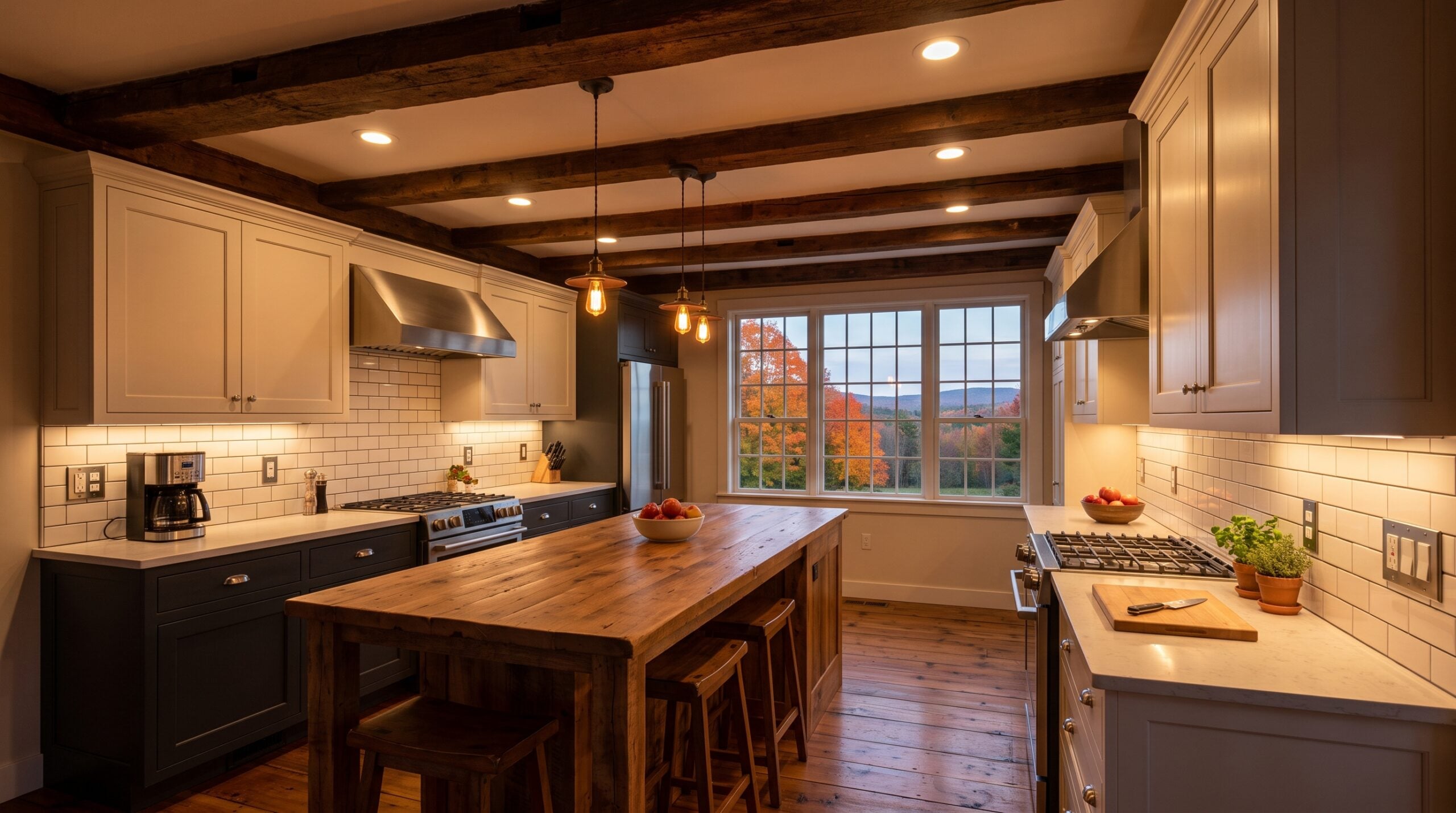
Electrical Remodeling in New Hampshire
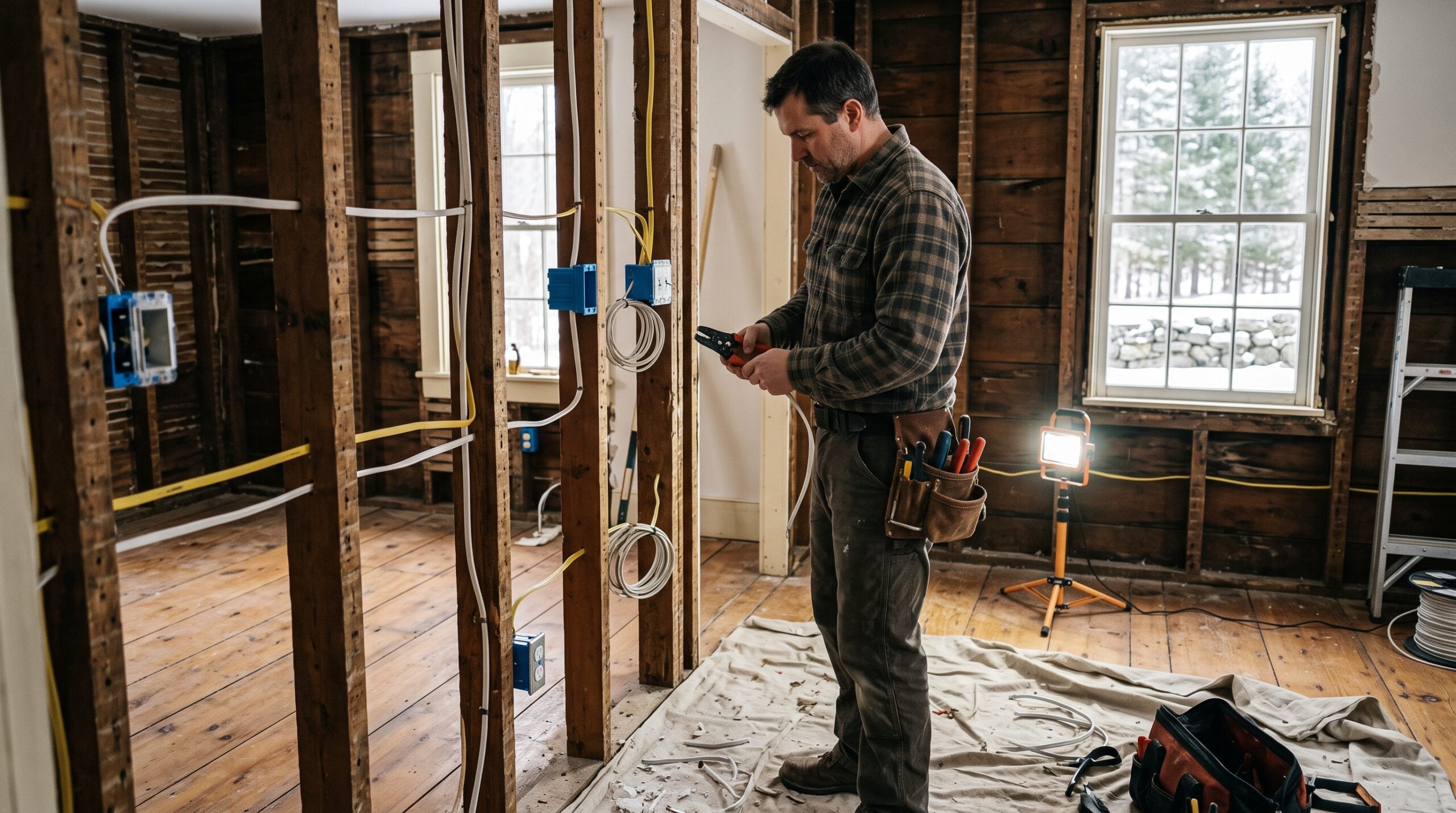
Remodeling a kitchen, finishing a basement, adding a home office, or updating an older New Hampshire house often requires more than new finishes. Heritage Home Service provides electrical remodeling in New Hampshire to help homeowners safely update wiring, outlets, switches, lighting, circuits, and other electrical components as part of a renovation.
Our electricians can evaluate your existing system, plan the electrical work required for the project, and coordinate upgrades that support the way you plan to use the remodeled space.
What Electrical Work May Be Needed During a Remodel?
The electrical portion of a renovation depends on the room, the age of the home, and what is changing.
A simple cosmetic update may require only new lighting or outlets. A major renovation that moves walls, adds appliances, or changes how rooms are used can require more extensive electrical work.
Electrical remodeling may include:
- Adding or relocating outlets
- Installing new switches
- Updating lighting
- Adding dedicated circuits
- Replacing outdated wiring
- Reconfiguring wiring when walls move
- Adding electrical connections for appliances
- Installing GFCI or AFCI protection where required
- Updating electrical boxes and connections
- Preparing wiring for new fixtures and equipment
- Evaluating panel capacity for added electrical demand
The best time to plan these changes is before walls are closed and finishes are installed.
When Should an Electrician Get Involved in Your Remodeling Project?
Bring an electrician into the project early when the renovation changes electrical loads, walls, appliances, lighting layouts, or room use.
Early planning can help identify questions such as:
- Does the existing panel have enough capacity?
- Will new appliances need dedicated circuits?
- Does existing wiring need to be replaced?
- Where should outlets and switches be located?
- Will walls being removed contain electrical wiring?
- Does the remodeled area need additional electrical protection?
- Will new lighting require additional wiring or controls?
Waiting until construction is well underway can make electrical changes more difficult.
Planning a renovation? Contact Heritage Home Service for professional electrical remodeling in New Hampshire.
How Is Electrical Remodeling Different From General Electrical Installation?
Electrical remodeling combines new electrical work with an existing home and electrical system.
That creates different considerations from electrical work in completely new construction. Existing wiring, panel capacity, previous renovations, room layouts, and the age of the house can all affect the project.
For individual upgrades and new electrical components, homeowners can also use Heritage’s electrical installation services.
Electrical remodeling is the broader service when electrical changes are part of a kitchen renovation, bathroom update, basement finishing project, addition, or other substantial improvement to an existing home.
Does Remodeling an Older Home Require Rewiring?
Not automatically.
Older wiring does not necessarily mean the entire house must be rewired. The condition, type, capacity, and configuration of the existing electrical system all matter.
Renovation work can, however, expose wiring that is outdated, damaged, or unsuitable for the remodeled space.
Rewiring may be considered when:
- Existing wiring is deteriorated
- Wiring has been damaged
- Previous electrical work is unsafe
- The remodeled area requires significant circuit changes
- Existing wiring cannot adequately support new electrical demands
- A larger renovation makes updating old wiring practical
When a project involves substantial replacement of existing wiring, Heritage’s dedicated [home rewiring] service provides more detail about that process.
The goal should be to perform the electrical work the home actually needs rather than automatically replacing wiring simply because the property is older.
What Electrical Updates Are Common During a Kitchen Remodel?
Kitchen remodeling can significantly change a home’s electrical requirements.
Modern kitchens often include refrigerators, dishwashers, garbage disposals, microwaves, ranges, ventilation equipment, countertop appliances, lighting, and other electrical equipment.
Depending on the project, electrical work may include:
- Relocating outlets
- Adding receptacles
- Installing dedicated appliance circuits
- Updating switches
- Adding under-cabinet lighting
- Installing recessed or decorative lighting
- Providing electrical connections for new appliances
- Updating circuit protection
- Evaluating panel capacity
Electrical planning should be coordinated with the new cabinet, countertop, appliance, and lighting layouts.
That helps prevent situations where an outlet ends up behind an appliance, switches are inconveniently located, or new equipment cannot be connected as planned.
What Electrical Work Is Needed for a Bathroom Remodel?
Bathrooms combine electricity and water, making proper electrical installation especially important.
A remodel may involve new lighting, ventilation, receptacles, heated features, or changes to the room layout.
Electrical work can include:
- Vanity lighting
- Ceiling lighting
- Exhaust fan connections
- Receptacle placement
- GFCI protection
- New switches
- Dedicated circuits where appropriate
- Wiring for new bathroom equipment
The exact requirements depend on the renovation and equipment being installed.
An electrician can coordinate the electrical work with the rest of the bathroom project so wiring and electrical components are properly positioned before walls and finishes are completed.
Do Finished Basements Need Electrical Upgrades?
Finishing a basement can transform a lightly used storage area into living space, which often changes its electrical needs.
A finished basement might include:
- Bedrooms
- Family rooms
- Home offices
- Workshops
- Exercise areas
- Entertainment spaces
- Bathrooms
- Laundry areas
Each use creates different lighting, outlet, and circuit requirements.
Older New Hampshire homes may also have basement electrical systems that were originally designed for utility equipment and occasional use rather than modern living spaces.
An electrician can evaluate the existing system and plan circuits, outlets, lighting, and other electrical components for the finished area.
What About Electrical Work for a Home Addition?
Adding rooms increases both living space and electrical demand.
An addition may require new circuits for lighting, receptacles, HVAC equipment, appliances, and other devices. The existing electrical panel and service should also be considered to determine if they can support the additional load.
Planning may involve:
- Reviewing the electrical needs of the addition.
- Evaluating existing panel capacity.
- Planning new circuits.
- Determining outlet and switch locations.
- Coordinating lighting and equipment connections.
- Installing and testing the new electrical components.
If the project requires broader electrical upgrades, those should be identified early enough to become part of the renovation plan.
Can You Add More Outlets During a Remodel?
Yes. Remodeling is often a good opportunity to improve outlet placement.
Older homes may have fewer receptacles because they were built before households relied on today’s number of electrical devices.
New outlets may be useful around:
- Kitchen counters
- Home offices
- Entertainment centers
- Bedside areas
- Finished basements
- Workshops
- Bathrooms
- Laundry spaces
Outlet placement should be planned around the finished room rather than simply copying the old layout.
Heritage can also help with dedicated outlet and switch services when homeowners need these upgrades outside a larger remodeling project.
Can You Upgrade Lighting During a Remodel?
Lighting is one of the most visible parts of an electrical renovation.
A remodel can provide an opportunity to improve both the appearance and usefulness of a room through:
- Recessed lighting
- Task lighting
- Pendant fixtures
- Vanity lighting
- Under-cabinet lighting
- New ceiling fixtures
- Additional switches
- Improved lighting controls
Lighting plans should consider how each part of the room will be used.
A kitchen, for example, may need general lighting plus focused illumination over counters and work areas. A finished basement may need additional lighting because natural light is limited.
Heritage’s indoor and outdoor lighting services can support projects that are primarily focused on lighting rather than a larger renovation.
Will My Electrical Panel Support My Remodel?
That depends on the existing electrical system and what you plan to add.
Renovations involving new appliances, additional rooms, HVAC equipment, or other significant electrical loads can increase the demand placed on the panel.
An electrician can evaluate the existing system and determine if it can support the proposed changes.
Signs that a broader evaluation may be worthwhile include:
- Limited space for additional circuits
- Repeated breaker trips
- Major new electrical loads
- An older electrical panel
- A substantial home addition
- Multiple new dedicated circuits
If the existing equipment is no longer appropriate for the home’s needs, an electrical panel upgrade may become part of the remodeling plan.
Why Does Electrical Planning Matter in New Hampshire Homes?
New Hampshire has a broad mix of housing, from historic properties to newer construction.
Older homes in established communities may have undergone several renovations over the years. That can leave electrical systems containing work from different periods, each completed for different household needs.
A renovation can expose:
- Older wiring
- Abandoned wiring
- Previous modifications
- Limited circuits
- Inconvenient outlet layouts
- Electrical systems designed for lower household demand
New Hampshire homeowners also rely heavily on electrical systems during harsh winter weather. Heating equipment, lighting, well pumps, generators, and other essential systems can make electrical capacity particularly important.
A remodeling project provides an opportunity to consider how the home’s electrical system supports both the new space and the household as a whole.
What Happens During an Electrical Remodeling Project?
Every renovation is different, but electrical remodeling generally follows a clear process.
1. Review the Remodeling Plans
The electrician determines what is changing and how the finished space will be used.
2. Evaluate Existing Electrical Systems
Existing wiring, circuits, panel capacity, and relevant electrical components are reviewed.
3. Plan the Electrical Changes
The project is mapped around new walls, appliances, fixtures, lighting, outlets, and other electrical needs.
4. Complete Rough Electrical Work
Wiring, boxes, and other components that need to be installed before walls are finished are completed at the appropriate stage of construction.
5. Install Finished Components
Outlets, switches, lighting, and other electrical devices are installed as the remodel progresses.
6. Test the Electrical Work
The completed work is checked for proper operation.
Coordination is particularly important when electricians, plumbers, HVAC technicians, carpenters, and other trades are working within the same area.
Should You DIY Electrical Work During a Remodel?
Renovations can encourage homeowners to handle parts of the project themselves, but electrical work has serious safety implications.
Incorrect wiring can create risks involving:
- Electric shock
- Electrical fires
- Overloaded circuits
- Damaged equipment
- Improper protection
- Hidden problems behind finished walls
Moving an outlet or installing new wiring can also involve more than the visible device itself.
Professional electrical work helps make sure the system behind the finished renovation receives the same attention as the parts of the project you can see.
Updating your kitchen, bathroom, basement, or another part of your home? Schedule electrical remodeling service with Heritage Home Service.
Why Choose Heritage Home Service for Electrical Remodeling?
Heritage Home Service is a family-owned home services company serving homeowners throughout New Hampshire and Northern New England.
Our electrical services cover both individual installations and larger projects involving existing home systems. We can help homeowners plan electrical changes around new rooms, layouts, appliances, lighting, and changing household needs.
Heritage also provides home rewiring, electrical installations, panel upgrades, lighting services, outlet and switch replacement, generator installation, and electrical repairs.
Having broader electrical services available is particularly helpful when a renovation reveals an existing problem or an upgrade that needs to be addressed before construction continues.
Electrical Remodeling in NH
FAQs
-
When should I hire an electrician for a remodel?
Bring an electrician into the planning process before walls are closed or major finishes are installed. Early involvement makes it easier to plan circuits, wiring, lighting, switches, and outlet locations around the finished design.
-
Do I have to rewire my house when remodeling?
No. Rewiring depends on the condition and suitability of the existing electrical system. Some projects only require localized electrical changes, while larger renovations may make more extensive rewiring appropriate.
-
Do I need new circuits for a kitchen remodel?
Possibly. New appliances and changes to the kitchen layout can create different electrical requirements. An electrician can review the planned equipment and existing circuits to determine what is needed.
-
Can electrical outlets be moved during a remodel?
Yes. Outlets and switches can often be added or relocated as part of remodeling electrical work. Their placement should be planned before walls and finishes are completed.
-
Does finishing a basement require new electrical wiring?
Often, at least some new electrical work is needed because an unfinished utility or storage area has different requirements from finished living space. The exact work depends on the planned use and existing system.
-
Can a remodel require an electrical panel upgrade?
Yes. A major renovation that adds significant electrical demand or requires several new circuits may expose limitations in the existing panel. An electrician can evaluate capacity before recommending an upgrade.
Schedule Electrical Remodeling in New Hampshire
One Trusted New Hampshire Team for All Your Electrical Remodeling Needs
Good electrical planning helps make a renovated space functional behind the walls as well as beautiful on the surface. Heritage Home Service can help with wiring, circuits, outlets, switches, lighting, and other electrical work for renovations throughout New Hampshire.
Call Heritage Home Service today to schedule electrical remodeling in New Hampshire and start planning the electrical side of your home improvement project.


Financing Made Easy
When you choose Heritage, you can rest easy knowing that we provide straightforward options to help you budget for a complete solution that will last you for decades to come.
VIEW FINANCING OPTIONS

Home Advantage Membership
With Home Advantage Membership, enjoy peace of mind knowing your home’s plumbing, heating, cooling, and electrical needs are handled year after year—hassle-free, with added benefits.
VIEW MEMBERSHIP
What Our Customers Are Saying
Zach did an amazing job on maintaining our HVA system.. It was a pleasure to have him at our home working as a technician. We were very impressed how clean it came out
Show More
Ellen Noon
Installed new bathroom fan. Tyler was very knowledgeable, professional, and efficient. Took time to explain installation and show me photos. Cleaned up after installation. Great communication from Heritage and Tyler.
Show More
Ellen Stanford
Angel was very thorough in describing the work he performed and noting that our system could use additional cleaning to ensure its longevity. I appreciated his knowledge and patience.
Show More
Douglas Cote
Nicholas provided exceptional service and was very thorough. He also answered questions I had and was very knowledgeable. Thank you
Show More
Gloria Hallett
Tech was great! $1140 seems a little steep for two shut off replacements and a faucet install 1.5hrs total labor…but I guess you get what you pay for, and Zach was great.
Show More
Brady Patterson
He was very efficient and detailed. He explained exactly what was done and what was going on with my furnace. Very personable and professional. I would recommend Heritage Home Services.
Show More
paula garabedian
John came out to fix a faulty dryer outlet and did a great job. He clearly knows his work. He found the problem quickly and fixed it right the first time. What I appreciated most was how well he explained everything: what caused the issue, how he fixed it, and what to watch for going forward. He answered all my questions patiently and never made me feel rushed. The price was a bit on the higher side, but the quality of the work and the peace of mind made it worth it. I’d definitely call him again and recommend him to anyone needing electrical work.
Show More
Tony Loyd
Kyle and his team were great. The communication before and during the service were fantastic. Very knowledgeable. Also worked cleanly and efficiently. Would use him and his team again.
Show More
Bill Curry
I had a wonderful experience with Heritage Plumbing Company, especially with Chris, the technician who serviced our heating system today. He arrived on time, communicated throughout the process, and did an excellent job. He was professional, knowledgeable, and made sure everything was taken care of. My tenants are very pleased with the service, and so am I! It’s such a relief to work with someone who is reliable, courteous, and takes pride in their work. Thank you, Chris, for the excellent service. Highly recommend!
Show More
Rossy Concepcion
The guys were great. Corey went thru all steps they were taking and took the time to answer questions. I felt comfortable they knew what they were doing. Great job
Show More
Nicole Martin
Schedule a comprehensive service near you!
Whether you need routine maintenance, repair, or new installation – we have you covered.