
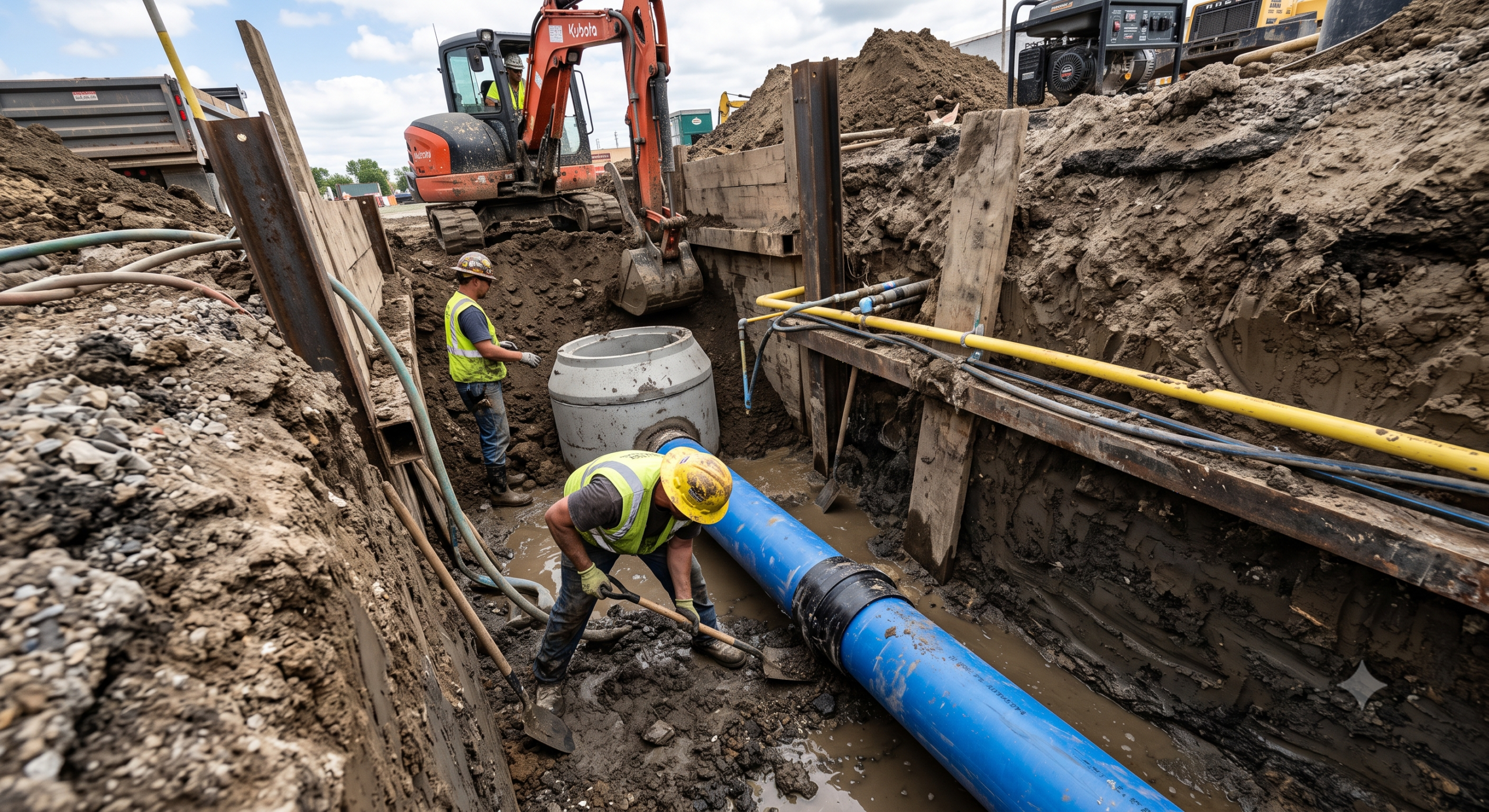
Drain Clearing Services in New Hampshire
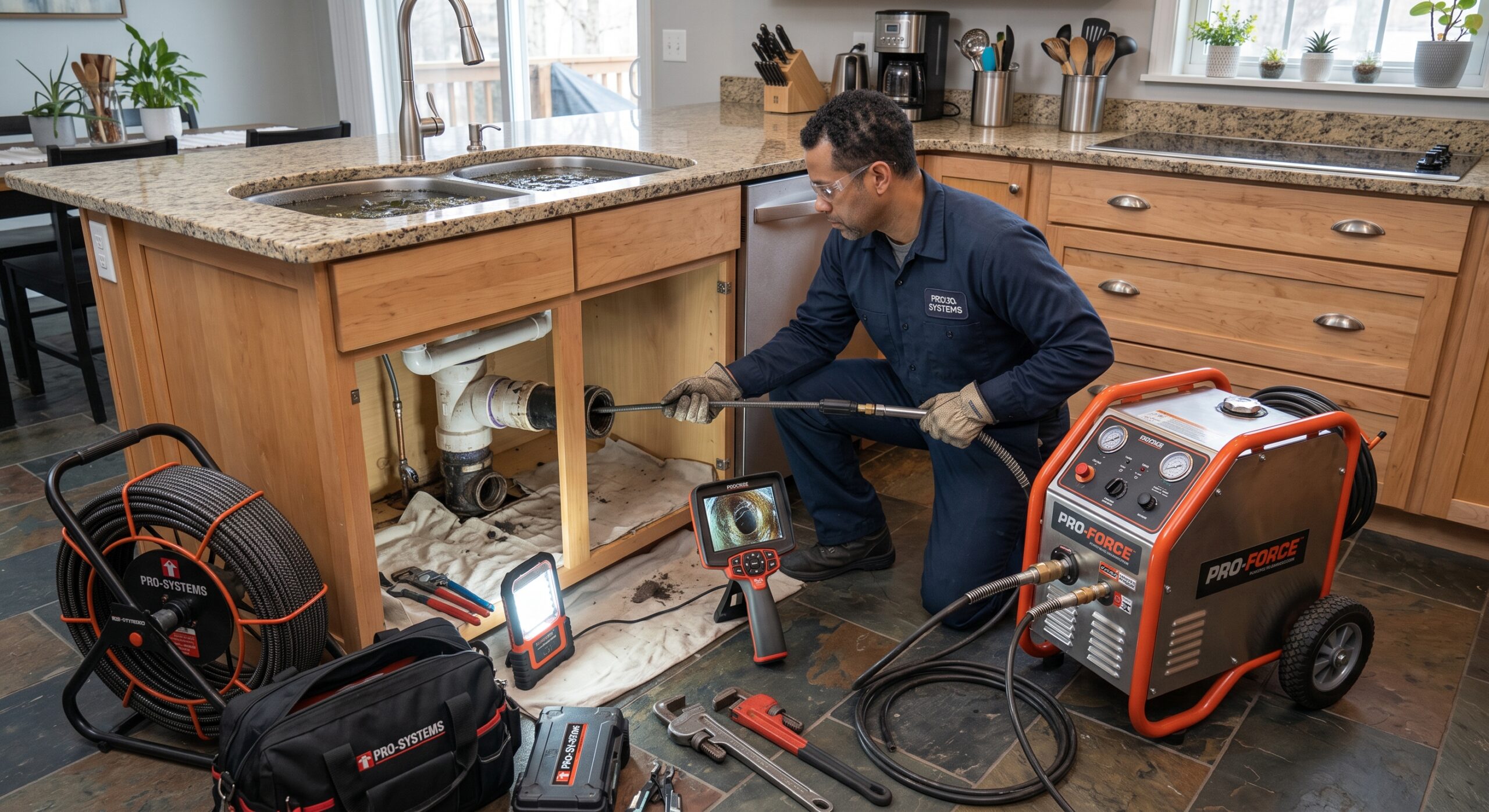
Heritage Home Service is proud to provide professional drain clearing services to homeowners across New Hampshire. Whether you’re dealing with a kitchen sink that takes forever to empty, a shower drain that pools water around your ankles, or a main line that’s backing up into your basement, our experienced plumbing team has the tools and know-how to clear the problem and get your home’s plumbing flowing the way it should.
Call Heritage Home Service today for fast, reliable drain clearing in New Hampshire.
Common Drain Problems New Hampshire Homeowners Face
Clogged and slow drains are one of the most frequent plumbing calls we receive — and for good reason. The everyday use of your home’s plumbing system creates buildup over time, and eventually that buildup becomes a problem you can’t ignore. Here are the situations we hear about most often from homeowners across New Hampshire:
The Kitchen Sink That Won’t Drain
You finish washing dishes and the water just sits there, slowly creeping down over the next ten minutes. Over time, grease, cooking oils, soap, and food particles stick to the inside of kitchen drain pipes and build up layer by layer. New Hampshire winters make this worse — cold temperatures cause grease to solidify faster inside pipes, narrowing the passage until water can barely get through. A simple pour of dish soap down the drain won’t fix it once the buildup is significant.
The Shower Drain That’s Getting Slower Every Week
It starts subtly — a little standing water at the end of your shower. Then the water is up to your ankles. Then it’s not draining at all by the time you step out. Hair, soap scum, and mineral deposits from New Hampshire’s hard water are the usual culprits. They accumulate on the drain cover and deep in the pipe, creating a sticky mass that standard drain covers can’t prevent. This is one of the most common calls we get from families with multiple people sharing a bathroom.
The Toilet That Keeps Running Slow or Backing Up
A toilet that flushes sluggishly, gurgles after flushing, or backs up when it shouldn’t is often a sign of a partial clog somewhere in the drain line rather than the toilet itself. Flushing anything beyond toilet paper — even products marketed as flushable — can build up in the line over time. In older New Hampshire homes with narrower clay or cast iron drain lines, this problem shows up more frequently and more stubbornly.
Multiple Slow Drains Throughout the House
When it’s just one drain running slowly, the problem is usually local — a clog in that fixture’s individual drain line. When you notice two, three, or more drains running slowly at the same time, the main sewer line is the likely culprit. A partial blockage in the main line restricts flow for the entire home. Left alone, it progresses to a full backup — often at the worst possible time.
The Basement Floor Drain That Smells or Backs Up
Basement floor drains collect a lot of debris over time, particularly in homes where the basement is used as a utility space, workshop, or laundry area. When the trap dries out or the basement floor drain line becomes partially blocked, sewer gases can work their way back up into the basement. A slow or backing-up floor drain is one of the clearest signs that your main line or the drain itself needs professional attention.
When Should You Call a Professional for Drain Clearing?
There’s a time and place for a plunger or a store-bought drain cleaner — but there are situations where those solutions either won’t work or could make the problem worse. Call Heritage Home Service when:
- The same drain keeps clogging repeatedly despite clearing — the blockage is likely deeper in the line than a plunger can reach
- Multiple drains in your home are running slowly or backing up at the same time
- You’re hearing gurgling sounds from drains or toilets when you run water elsewhere in the house
- Water is backing up out of a floor drain, toilet, or tub when another fixture is used
- You’ve used liquid drain cleaners repeatedly and the drain keeps slowing back down — chemical cleaners don’t remove the buildup, they just temporarily break through it
- You notice sewage odors coming from drains or the yard outside
- You’re preparing to sell your home and want a clean bill of health on the plumbing
Chemical drain cleaners are particularly worth avoiding as a long-term solution. They’re caustic enough to damage older pipe materials — including the cast iron and clay lines common in New Hampshire’s older housing stock — and they don’t address the root cause of the problem. Professional drain clearing removes the blockage completely rather than chemically dissolving part of it and leaving residue behind.
Dealing with a stubborn drain? Contact Heritage Home Service now — we’ll clear it right the first time
How Heritage Home Service Handles Drain Clearing
When you call Heritage for a drain clearing, here’s what actually happens:
We Diagnose Before We Clear:
Not all clogs are the same. A kitchen drain clogged with grease needs a different approach than a main sewer line partially blocked by roots. Heritage technicians assess the situation, asking the right questions and evaluating which drains are affected and how, before recommending a course of action. Our New Hampshire service area team uses sewer camera inspection for suspected main line issues, so we can see exactly what’s happening inside the pipe before we start.
We Use the Right Equipment for the Job
For most drain clogs, we use professional-grade drain snakes and augers that reach far deeper into the line than any consumer tool. For more significant buildup — particularly in kitchen lines with grease accumulation or sewer lines with root intrusion — we use hydro jetting, a high-pressure water clearing method that scours the full interior of the pipe rather than just punching through the clog. The result is a genuinely clean pipe, not a temporarily cleared one.
We Leave You With a Clear Picture of What We Found
After clearing the drain, Heritage technicians explain what caused the blockage, whether there are any concerns about the pipe’s condition, and what you can do to prevent the problem from recurring. If we find something during inspection that suggests a deeper issue — root infiltration, a cracked pipe, or significant buildup throughout the line — we’ll tell you clearly and give you options, not pressure.
Schedule your drain clearing service with Heritage Home Service today — same-day service available across New Hampshire.
Frequently Asked Questions About Drain Clearing in New Hampshire
FAQs
-
Why does my kitchen drain keep clogging even after I clean it?
If your kitchen drain clogs repeatedly, the issue is almost always grease and food particle buildup coating the pipe walls further down the line than a plunger or drain cleaner can reach. Each time you clear the surface blockage, the buildup behind it narrows the pipe a little more. Professional drain clearing removes the accumulation from the pipe wall itself — not just the immediate clog — which is why it provides lasting results that store-bought solutions don’t.
-
Is it okay to use Drano or liquid drain cleaners regularly?
Occasional use in a pinch is unlikely to cause immediate harm, but regular use of chemical drain cleaners is a bad long-term habit. They don’t remove buildup from pipe walls, they chemically dissolve just enough to temporarily restore flow, leaving residue that re-clogs faster. More importantly, repeated use can degrade older pipe materials, particularly the galvanized steel and cast iron pipes found in many New Hampshire homes built before the 1970s, including those on private well water. Professional clearing is a safer and more effective solution.
-
What’s the difference between drain clearing and hydro jetting?
Drain clearing with a snake or auger physically breaks up and removes a blockage by running a cable through the pipe. It’s effective for most standard clogs. Hydro jetting uses pressurized water to scour the entire interior wall of the pipe, removing not just the blockage but the grease, scale, and biofilm coating the pipe surface. Heritage uses hydro jetting when a drain or sewer line has significant buildup, recurring blockage issues, or root intrusion that needs to be fully flushed rather than just disturbed.
-
How often should I have my drains professionally cleared?
For most homeowners, professional drain clearing every one to two years is a practical preventative measure, particularly for kitchen lines, which accumulate grease fastest, and main sewer lines, which serve the entire home. It’s a good time to have related systems like your water heater checked as well. Homes with heavy tree coverage near sewer lines, older clay or cast iron drain systems, or a history of recurring blockages benefit from more frequent attention. A single professional clearing often resolves years of gradual buildup.
-
My drain is slow but not completely blocked. Should I still call?
Yes — a slow drain is a clog in progress, not a clog that hasn’t happened yet. The buildup that’s causing the slowdown will continue to accumulate until the drain stops completely, usually at the worst possible moment. Calling Heritage when the drain is slow rather than fully blocked means a faster, less complicated service visit and prevents the problem from escalating to a backup.
Let Heritage Handle Your New Hampshire Underground Pipe Project End to End
Need underground pipe repair or replacement in Maine? Call Heritage Home Service today for a thorough diagnosis and honest estimate. Same-day response available for emergencies.


Financing Made Easy
When you choose Heritage, you can rest easy knowing that we provide straightforward options to help you budget for a complete solution that will last you for decades to come.
VIEW FINANCING OPTIONS

Home Advantage Membership
With Home Advantage Membership, enjoy peace of mind knowing your home’s plumbing, heating, cooling, and electrical needs are handled year after year—hassle-free, with added benefits.
VIEW MEMBERSHIP
What Our Customers Are Saying
We had an issue with our HVAC and Dan came in on a Sunday and made sure that everything was done perfectly. I would definitely recommend Dan for future Jobs when it comes to your furnace and AC.
Show More
Raymond Lamothe
Daniel was professional and knowledgeable . He patiently explained what was wrong and told me what he was going to do . No.gimmics .
Show More
tristen h
Bailey from heritage was great. Very helpful and seemed to be very interested in helping not just getting the job done quick. A bonus was a handsome plumber :) haha. Tiffany bidet
Show More
Babydoc 7862
Shawn came out and was very efficient, very kind, took the time out to help us and explain everything. Great service for sure.
Show More
Catarina Spencer
Sean was great for helping fix some drainage issues with our sink and diagnosing an issue that could have become bigger if not caught.
Show More
Ian Fitzgerald
Water heater maintenance . The service was explained to me and was what I expected other than I was told on the phone a camera would go in to view the inside. Marcus said that was not needed as he could see inside. He explained what he did do and said all was good right now. Very happy with today’s service.
Show More
Carol Leblanc
David was excellent. He did a thorough job on our boiler upkeep. He let us know about a couple of problems that might pop up down the line, but took an educational approach rather than a sales pitch. He was a pleasure to work with and we’ll definitely continue doing business with David and Heritage in the future.
Show More
April Fanning
The technician, Jason, was very knowledgeable. He took a look at our BR ceiling fan and knew what needed to be done. I will call when the part is in.
Show More
Laura Paul
Heritage was incredibly easy to work with when several outlets throughout our house lost power after a storm. They were very responsive, flexible, and able to come out the next day to diagnose and fix the issue. Anthony was great to work with—professional, knowledgeable, and efficient. We would definitely recommend Heritage to anyone looking for a reliable electrician.
Show More
Marilyn Vorderer
Sean was here within 90 minutes of calling Heritage. We had a main sewer line backup emergency. He was so thorough and helped us fix it. He talked us through everything he was doing and was knowledgeable and nice and fast. 10/10
Show More
Hilary Gordon
Schedule a comprehensive service near you!
Whether you need routine maintenance, repair, or new installation – we have you covered.