
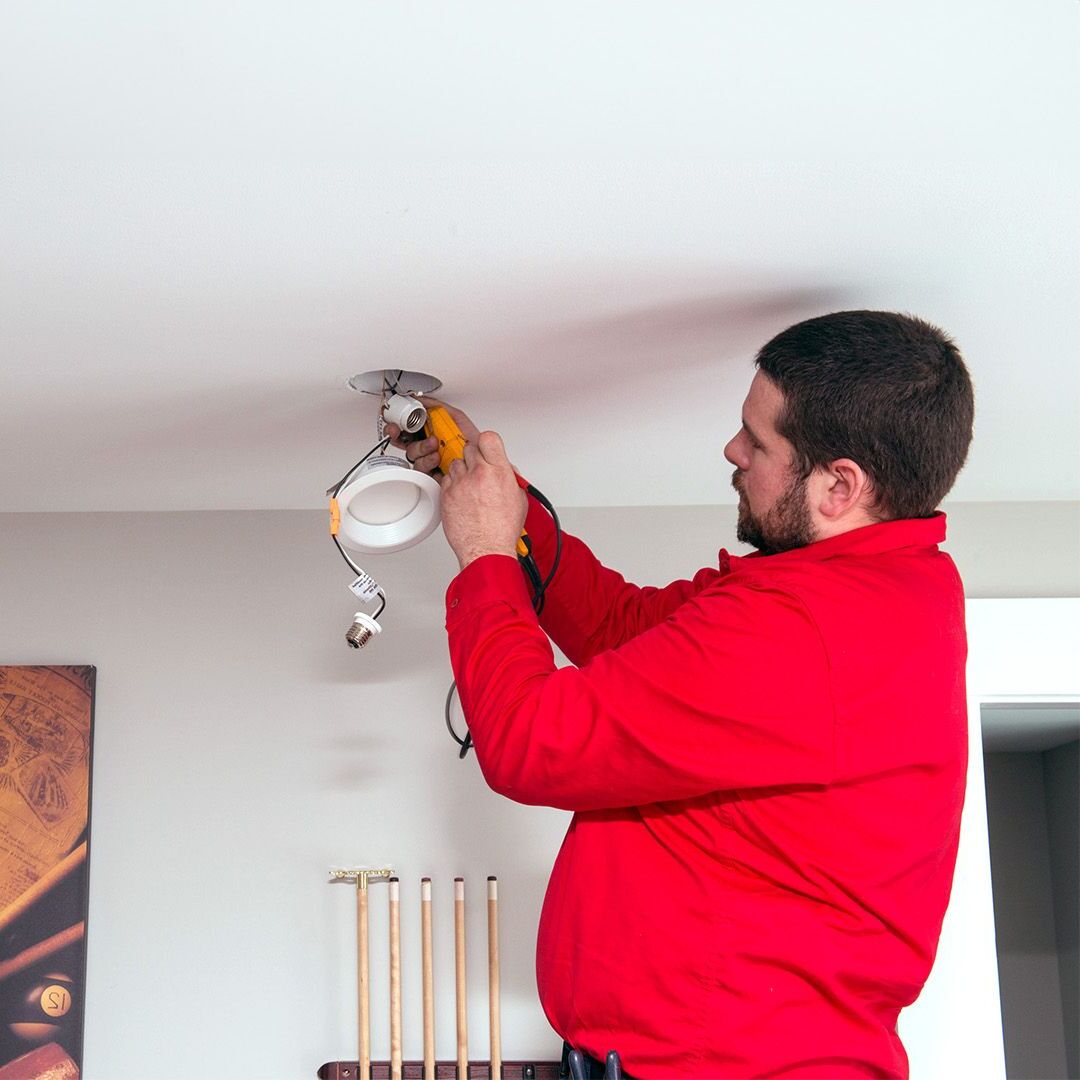
Home Rewiring in New Hampshire
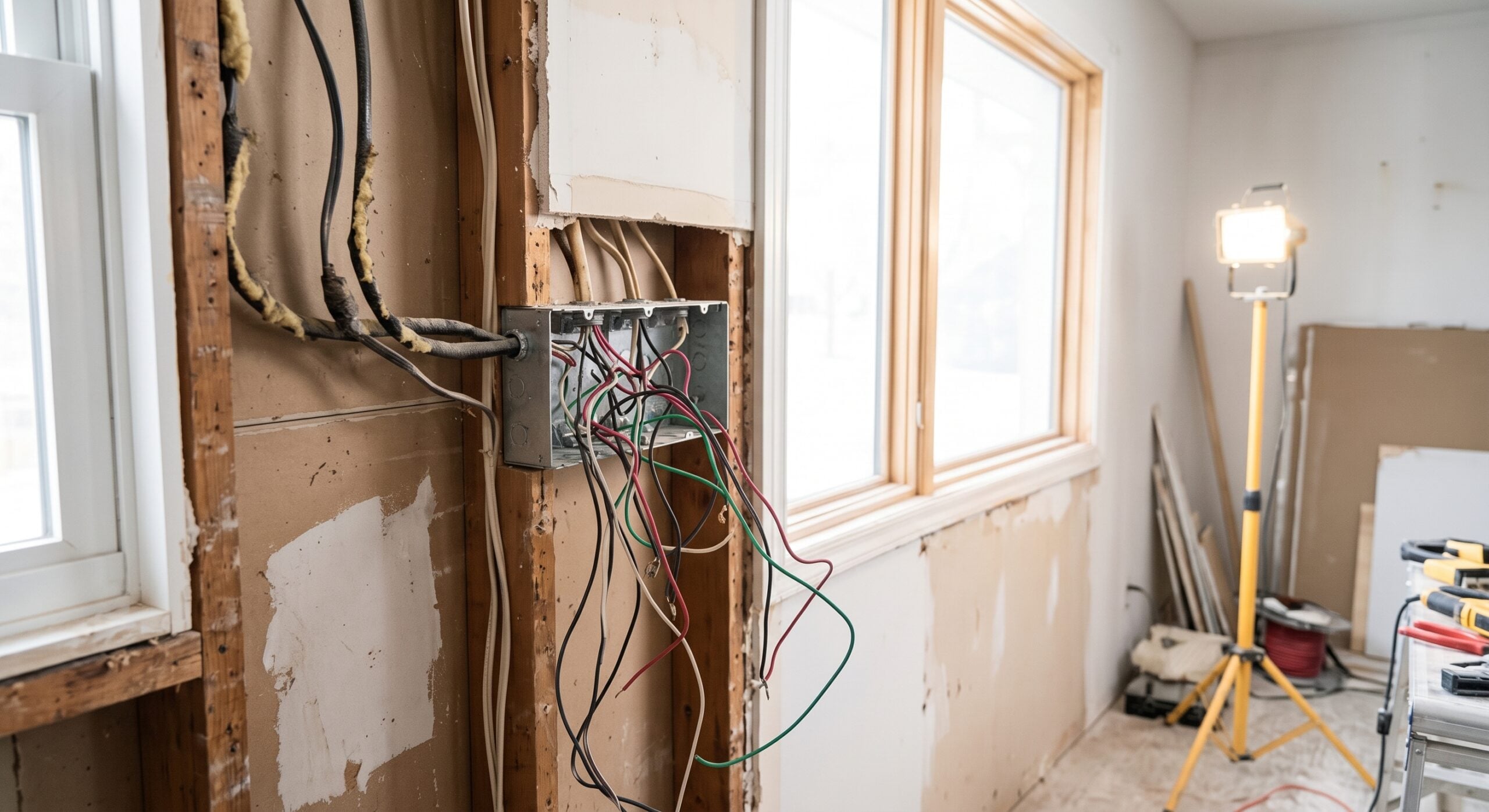
Heritage Home Service provides home rewiring services for homeowners across New Hampshire. Aging, damaged, or outdated wiring can make it harder for a home’s electrical system to safely support today’s appliances, HVAC equipment, electronics, and other everyday needs.
A licensed electrician can inspect your wiring, identify areas that need attention, and determine if targeted repairs or more extensive rewiring make sense. Heritage serves New Hampshire homes with upfront pricing and local electrical professionals.
What’s Included With Home Rewiring?
Home rewiring can mean replacing wiring throughout a house or updating specific areas where existing wiring is damaged, outdated, or no longer suitable for the home’s electrical needs.
Heritage provides home rewiring services for New Hampshire homeowners who need to update their electrical systems.
Depending on the condition of the home, rewiring may include:
- Replacing aging electrical wiring
- Updating damaged wiring
- Rewiring individual rooms or sections of a home
- Installing wiring for renovations
- Adding or updating circuits
- Updating outlets and switches
- Correcting unsafe previous electrical work
- Improving grounding where needed
- Connecting updated wiring to the electrical panel
- Replacing electrical boxes or related components
The amount of work depends on the existing system. A licensed electrician can evaluate your home before recommending a complete or partial rewiring project.
What Are the Signs Your Home May Need Rewiring?
Electrical wiring is mostly hidden behind walls and ceilings, so homeowners cannot always see when it has deteriorated. Problems elsewhere in the electrical system may provide warning signs.
Consider having your wiring inspected if you notice:
- Circuit breakers that trip frequently
- Lights that flicker or dim
- Outlets that feel unusually warm
- Buzzing or crackling near outlets or switches
- Burning or electrical odors
- Discolored outlets or switches
- Loose electrical connections
- Frequently blown fuses in an older system
- Visible cracked or damaged wiring
- Electrical problems affecting several rooms
- Too few outlets for everyday needs
One symptom does not automatically mean the entire house needs rewiring. Professional troubleshooting can determine if the problem is limited to one component or affects a larger part of the electrical system.
Do Older New Hampshire Homes Need Rewiring?
Not every older house needs to be completely rewired. The condition, type, and history of the electrical system matter more than the age of the house by itself.
New Hampshire has many homes built before today’s electrical demands became common. Over the years, these properties may have been renovated, expanded, or updated by different owners and contractors.
Older homes may contain:
- Aging wiring
- Older electrical panels
- Limited circuit capacity
- Two-prong outlets
- Previous electrical modifications
- Too few outlets
- Wiring that has been damaged over time
- Electrical systems designed for lower household demand
An electrical home safety inspection can help determine the condition of an older home’s wiring before a major project is recommended.
Is Partial Rewiring or Whole-Home Rewiring Better?
It depends on where the problem is and how much of the existing electrical system needs attention.
Partial rewiring may make sense when a problem is limited to a specific room, circuit, addition, or damaged section of wiring. It can also be appropriate during a renovation when only part of the home is being updated.
Whole-home rewiring may be considered when wiring problems are widespread, much of the electrical system is outdated, or the existing wiring cannot adequately support the home’s current needs.
A professional evaluation is important before making this decision. Replacing wiring throughout an entire house when only a smaller section needs attention can add unnecessary work and cost.
What Happens During a Home Rewiring Project?
The exact process depends on the size of the home and how much wiring needs to be replaced. Larger projects require careful planning because electricians may need access to wiring behind walls, ceilings, and other finished surfaces.
A rewiring project may include these steps:
- Inspect the existing electrical system. The electrician evaluates accessible wiring, circuits, outlets, switches, and the electrical panel.
- Identify areas that need updating. Damaged, outdated, or unsuitable wiring is documented.
- Review your home’s electrical needs. Planned renovations, appliances, HVAC equipment, and other electrical loads can affect the project.
- Develop the rewiring plan. The electrician determines where new wiring, circuits, outlets, switches, or other components are needed.
- Install the new wiring. Existing wiring is replaced or updated based on the approved project.
- Connect and test the system. Circuits and electrical devices are checked after installation.
Homeowners receive information about the recommended work and pricing before approved rewiring begins.
Can Rewiring Help During a Home Renovation?
Yes. Renovations are often a practical time to evaluate wiring because walls or ceilings may already be open.
A rewiring project may be useful during:
- Kitchen renovations
- Bathroom renovations
- Basement finishing
- Home additions
- Attic conversions
- Major interior remodeling
- Garage or workshop upgrades
Renovations can also change how much electricity a room uses. A remodeled kitchen, for example, may need additional outlets or circuits for new appliances.
Heritage provides electrical installation services when a project requires new circuits, outlets, switches, fixtures, or other electrical components.
Does Rewiring Require an Electrical Panel Upgrade?
Not always. Your current panel may already have the capacity and condition needed to support updated wiring.
An electrician may recommend evaluating the panel if it is outdated, damaged, undersized, or does not have enough room for the circuits your home requires.
A panel upgrade can also become relevant when homeowners are adding:
- Heat pumps
- Central air conditioning
- Major appliances
- EV charging equipment
- Home additions
- Workshops
- Other high-demand electrical equipment
Heritage provides circuit breaker panel services when panel work is needed as part of a larger electrical update.
Why Should a Licensed Electrician Rewire Your Home?
Home rewiring involves working with circuits that distribute electricity throughout the house. Mistakes involving connections, wire sizes, grounding, breakers, or circuit loads can create shock, overheating, equipment damage, and fire hazards.
Professional rewiring also requires knowledge of applicable electrical codes and installation requirements.
Heritage Home Service holds New Hampshire Electrical License #0316C and uses licensed professionals for residential electrical work.
Homeowners choose Heritage for:
- Licensed electricians: Rewiring is completed by qualified electrical professionals.
- Upfront pricing: You can review recommended work and pricing before the approved project begins.
- Local New Hampshire presence: Heritage supports homeowners from multiple locations within the state.
- Residential experience: Heritage has served New England homeowners since 1986.
- Full electrical service: Electricians can address wiring, panels, circuits, outlets, switches, and related needs.
For other residential electrical needs, visit the electrical services in New Hampshire hub.
Where Is Home Rewiring Available in New Hampshire?
Heritage provides rewiring and other electrical services across Central and Southern New Hampshire, the Lakes Region, and the Seacoast. Service is available in communities throughout Belknap, Hillsborough, Merrimack, Rockingham, and Strafford counties.
This includes Bedford, Manchester, Nashua, Concord, Laconia, Meredith, Portsmouth, Hampton, North Hampton, Dover, Rochester, Salem, Derry, Londonderry, Auburn, and nearby communities.
Visit the New Hampshire home services page for more information about local service coverage.
FAQs
-
Does an old house always need to be rewired?
No. The age of the home alone does not determine if rewiring is needed. An electrician should consider the wiring type, its condition, previous electrical work, and the home’s current electrical demands.
-
Can only part of my house be rewired?
Yes. Partial rewiring may be appropriate when electrical problems are limited to one room, circuit, addition, or section of the house. An inspection can determine how much work is needed.
-
How do I know if my wiring is unsafe?
Warning signs can include burning odors, warm outlets, repeated breaker trips, flickering lights, damaged wiring, buzzing sounds, or electrical problems in several areas. Some wiring concerns have no obvious symptoms, which is why an inspection can be useful in older homes.
-
Can rewiring add more outlets to my home?
Yes. A rewiring project can include new outlets, switches, circuits, and other electrical updates based on the home’s layout and needs.
-
Will my electrical panel need to be replaced during rewiring?
Not necessarily. The electrician can evaluate the condition and capacity of the existing panel. Replacement may be recommended if the panel cannot properly support the updated electrical system.
Schedule Home Rewiring in New Hampshire
If you are concerned about aging wiring, planning a renovation, or dealing with electrical problems in several areas of your home, Heritage Home Service can inspect the system and explain your options.
Schedule home rewiring with Heritage Home Service today or call (603) 354-0092.
Heritage Home Service is Here for You.
In New Hampshire, folks have come to rely on Heritage Home Service for Home Rewiring services. Our wide reach and quick availability make us a top choice for the community. We make the process stress-free, guiding you every step of the way.


Financing Made Easy
When you choose Heritage, you can rest easy knowing that we provide straightforward options to help you budget for a complete solution that will last you for decades to come.
VIEW FINANCING OPTIONS

Home Advantage Membership
With Home Advantage Membership, enjoy peace of mind knowing your home’s plumbing, heating, cooling, and electrical needs are handled year after year—hassle-free, with added benefits.
VIEW MEMBERSHIP
What Our Customers Are Saying
If you lost something I’m very happy with the company. They’re very quick to respond . And they know what they’re doing
Show More
Rosco Pup
We had an excellent experience with Luis from Heritage. We had a backup in our kitchen sink which was threatening to flood our entire kitchen and condo on a Saturday night. He promptly came out and snaked the entire system. The kitchen was impeccable after his departure. I can’t say enough about his professionalism, courtesy, and knowledge level. He was outstanding, Dr. William Rothschild.
Show More
William Rothschild
I had a new furnace installed a month ago, and something wasn’t quite tracking. Stevenson showed up, did a deep dive into the possible causes, found the problem, and fixed it. He was personable, professional and thorough!
Show More
Linda Mary Langley
Had a plumbing emergency with my main water line. Steve came out and took care of it. Very happy with his service
Show More
Elizabeth Sanders
Jason was friendly, knowledgeable, and started working right away. He answered all my questions, and explained everything so that I could understand the process. Thanks again Jason, and I will use Heritage for future projects
Show More
Michelle Ciacchella
Angel was amazing. Very professional and went above and beyond to ensure my heating system was in a good place. He took time and caught a safety issue I would have never caught. Don’t skip your annual furnace maintenance whoever reads this! It’s important for your heating system and your health!!
Show More
Carrie Sivigny
Company set up appointment in a timely manner. Communication leading up to appointment via text was very good. Edward did a great job installing 2 new spigots on my house and pointed out a thing or two for consideration regarding future work. Edward was easy going and easy to work with.
Show More
Lawrence Rice Jr.
Macen was young & very smart . He is like Doctor Plumber 🪠. Well experienced! I did everything in my bathroom, water heater etc.
Show More
Maria O.
Carter was polite and knowledgeable, and answered all my questions. He was very easy to talk to and schedule the services I need, within my budget. I look forward to working with him and Heritage again soon.
Show More
Susanne Colletta
John was very personable and professional, clearly explaining the issues we were having with our burner unit, as well as helping to troubleshoot our Nest configuration. Gave us the peace of mind needed to ensure our family can come visit comfortably. Thank you!
Show More
Chris Strobel
Frequently Asked Questions
-
What are common signs my air conditioner needs repair?
Common signs include warm air blowing from the vents, weak airflow, unusual grinding or squealing noises, frequent cycling on and off, water leaks around the unit, or a noticeable increase in your electric bill. If you experience any of these, contact Heritage for a diagnosis.
-
Does Heritage repair all brands of air conditioners?
Yes, Heritage technicians are trained and equipped to repair all major air conditioner brands and models, including central air systems, heat pumps, and ductless units. We carry common parts on our trucks to complete many repairs in a single visit.
-
How much does air conditioner repair cost in New Hampshire?
Repair costs depend on the nature of the problem, ranging from simple fixes like a capacitor replacement to more involved repairs like a compressor or refrigerant leak fix. Heritage provides an upfront diagnosis and transparent pricing before beginning any work.
-
Should I repair or replace my air conditioner?
If your AC is over 10 to 15 years old, uses R-22 refrigerant, or the repair cost is more than half the price of a new system, replacement is usually the smarter financial choice. Heritage can help you evaluate your options and recommend the most cost-effective path forward.
-
How can I prevent air conditioner breakdowns?
Regular maintenance is the best prevention, including changing filters monthly during cooling season, keeping the outdoor unit clear of debris, and scheduling annual professional maintenance. Heritage offers maintenance services to keep your system running reliably through New Hampshire’s summers.
Schedule a comprehensive service near you!
Whether you need routine maintenance, repair, or new installation – we have you covered.
Find a Service Technician Near You
-
Belknap County, NH
- Alton
- Barnstead
- Belmont
- Gilford
- Gilmanton
- Laconia
- Meredith
- New Hampton
- Sanbornton
- Tilton
-
Hillsborough County, NH
-
Merrimack County, NH
-
Rockingham County, NH
- Atkinson
- Auburn
- Brentwood
- Candia
- Chester
- Danville
- Deerfield
- Derry
- East Kingston
- Epping
- Exeter
- Fremont
- Greenland
- Hampstead
- Hampton
- Hampton Falls
- Kensington
- Kingston
- Londonderry
- Newfields
- Newington
- Newmarket
- Newton
- North Hampton
- Northwood
- Nottingham
- Plaistow
- Portsmouth
- Raymond
- Rye
- Salem
- Sandown
- Seabrook
- South Hampton
- Stratham
- Windham
-
Strafford County, NH
-
Middlesex County, MA
-
Essex County, MA
- Amesbury
- Andover
- Beverly
- Boxford
- Danvers
- Georgetown
- Gloucester
- Groveland
- Haverhill
- Ipswich
- Lawrence
- Lynn
- Lynnfield
- Marblehead
- Merrimac
- Methuen
- Middleton
- Newburyport
- North Andover
- Peabody
- Rockport
- Rowley
- Salem
- Salisbury
- Saugus
- Swampscott
- Topsfield
- West Newbury
-
Worcester County, MA
- Auburn
- Boylston
- Charlton
- Dudley
- Grafton
- Holden
- Leicester
- Millbury
- Northborough
- Northbridge
- Oxford
- Paxton
- Princeton
- Rutland
- Shrewsbury
- Southborough
- Spencer
- Sterling
- Sutton
- Upton
- West Boylston
- Westborough
- Webster
- Worcester
-
Norfolk County, MA
- Braintree
- Brookline
- Canton
- Dedham
- Dover
- Foxborough
- Franklin
- Medfield
- Millis
- Milton
- Needham
- Norfolk
- Norwood
- Quincy
- Randolph
- Stoughton
- Walpole
- Wellesley
- Weymouth
- Wrentham
-
Suffolk County, MA
- Boston
- Chelsea
- Revere
- Winthrop
-
Cumberland County, ME
-
York County, ME
-
Androscoggin County, ME