
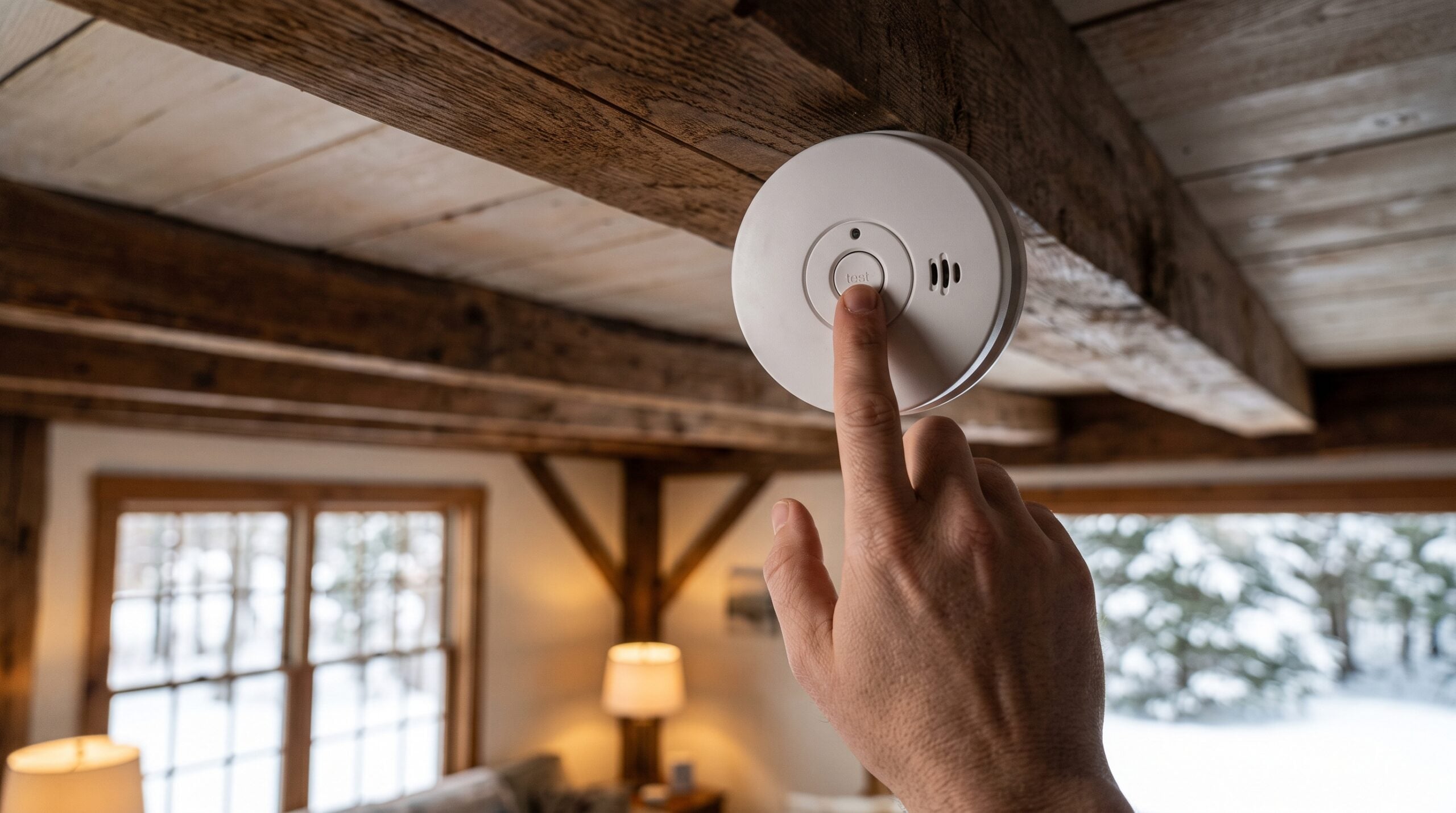
Smoke and Carbon Monoxide Detectors in New Hampshire
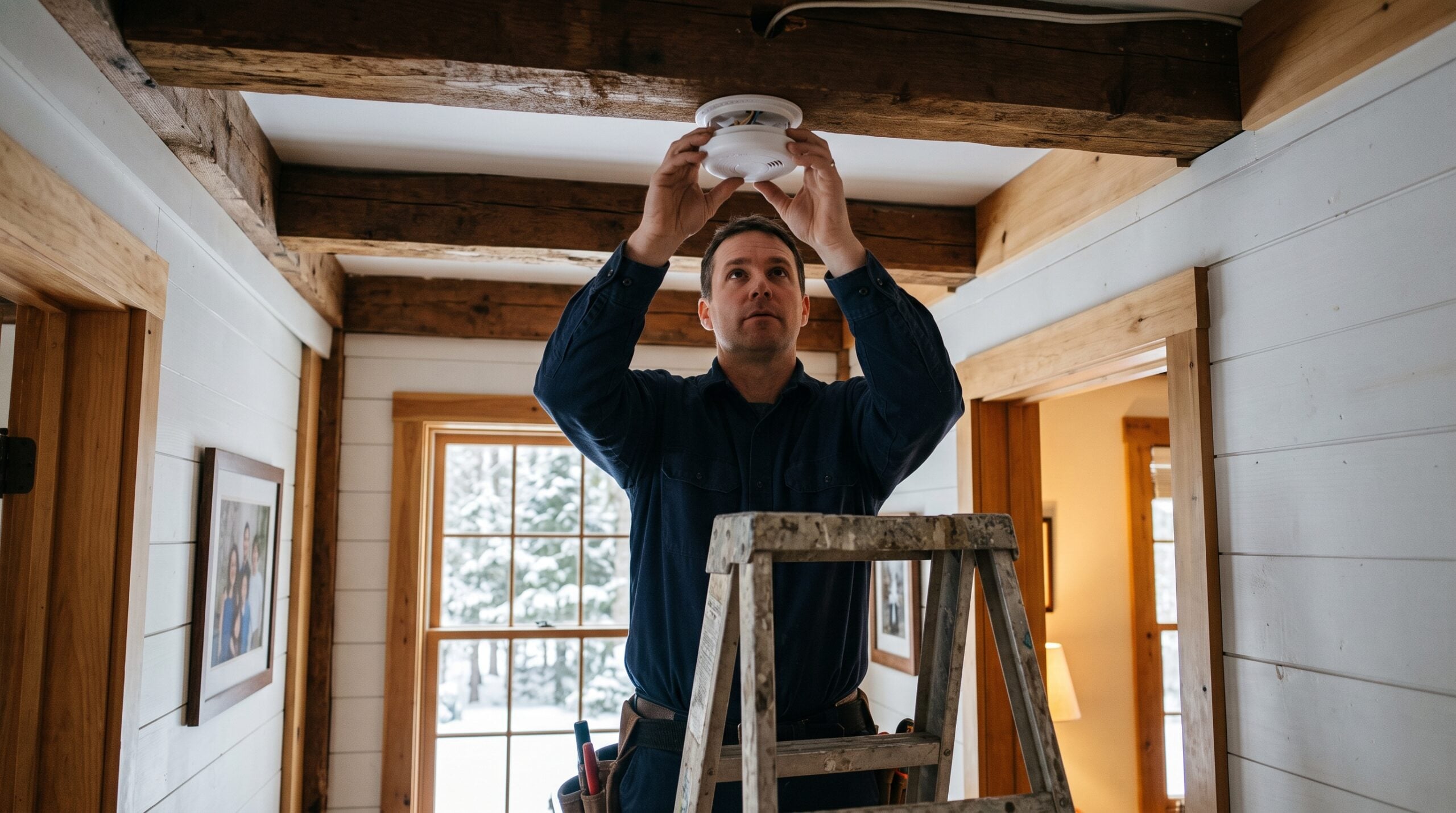
Smoke and carbon monoxide alarms provide critical early warnings when seconds matter. Heritage Home Service provides smoke and carbon monoxide detector installation and replacement in New Hampshire, including help with hardwired and interconnected alarms. Our electricians can evaluate detector locations, replace aging equipment, and help homeowners determine what their property needs based on the home and applicable requirements.
Where Should Smoke Detectors Be Installed?
Smoke alarm placement matters because a detector can only provide an effective warning when it is installed in an appropriate location.
Requirements can depend on the home, occupancy, renovation history, and applicable codes. In general, residential smoke alarm planning commonly focuses on sleeping areas, areas outside sleeping rooms, and the different levels of a home.
An electrician can evaluate:
- Number of floors
- Bedroom locations
- Hallways serving sleeping areas
- Basement and finished living areas
- Existing detector locations
- Hardwired alarm connections
- Interconnection between alarms
- Previous additions or renovations
Do not assume that an alarm is properly located simply because it has been in the same spot for years. Homes change, codes change, and older alarm layouts may not reflect current requirements.
Where Should Carbon Monoxide Detectors Be Installed?
Carbon monoxide, or CO, is particularly dangerous because people cannot see or smell it.
Fuel-burning equipment can create carbon monoxide when combustion or venting problems occur. Potential sources in and around a home can include furnaces, boilers, water heaters, fireplaces, generators, and other fuel-burning equipment.
Attached garages can create another potential source because vehicles produce carbon monoxide.
Placement requirements depend on applicable codes and the characteristics of the property. Sleeping areas are especially important because occupants need to be alerted if carbon monoxide reaches dangerous levels while they are asleep.
A professional evaluation can help determine appropriate locations rather than relying on guesswork.
Not sure if your home’s alarms are properly placed? Schedule smoke and carbon monoxide detector service with Heritage Home Service.
What Is the Difference Between a Smoke Alarm and a CO Alarm?
Smoke and carbon monoxide alarms detect different hazards.
Smoke Alarms
Smoke alarms are designed to provide warning when they detect conditions associated with a fire.
Carbon Monoxide Alarms
CO alarms monitor for carbon monoxide, a poisonous gas produced by incomplete combustion.
A home may need protection against both hazards.
Combination smoke and CO alarms are also available. These devices combine both detection functions into one unit, which can be useful in appropriate locations.
The important point is that having smoke alarms does not automatically mean your home has carbon monoxide protection, and having CO alarms does not replace the need for smoke detection.
What Does Interconnected Mean for Smoke and CO Alarms?
Interconnected alarms communicate with each other.
When one interconnected alarm detects a hazard, other connected alarms can also sound. That can be especially valuable in larger or multilevel homes.
For example, a detector responding to smoke in a basement may trigger alarms near upstairs bedrooms rather than relying on occupants to hear one alarm several rooms or floors away.
Interconnection can be accomplished in different ways depending on the alarm system and home.
If your property already has hardwired interconnected alarms, replacement equipment should be selected and installed appropriately for the existing system.
What Are Hardwired Smoke Detectors?
Hardwired alarms receive primary power through the home’s electrical system rather than relying solely on a replaceable battery.
Many hardwired alarms also include battery backup so the alarm can continue operating during a power outage.
Hardwired detectors may also be interconnected so an alarm in one area can activate other alarms throughout the home.
If your home has existing hardwired detectors, an electrician can help with:
- Detector replacement
- Electrical connections
- Interconnection issues
- Upgrading aging alarms
- Adding detectors during renovations
- Diagnosing detectors that are not receiving power
Do not modify household wiring simply to install or replace a detector unless you are qualified to perform the electrical work involved.
Do New Hampshire Homes Need Smoke and CO Detectors?
New Hampshire has requirements governing automatic fire warning equipment and carbon monoxide detection in residential properties. Exact requirements can vary according to the type of property and circumstances involved.
That is why homeowners should avoid relying solely on a generic online placement diagram.
Requirements may differ for:
- Single-family homes
- Multifamily properties
- Rental properties
- New construction
- Existing homes
- Renovations and additions
- Certain specialized residential occupancies
Local authorities can also be an important resource when a homeowner needs confirmation about requirements for a particular construction or remodeling project.
Heritage can address the electrical installation side of detector upgrades and replacements.
Why Is Carbon Monoxide a Concern During New Hampshire Winters?
New Hampshire’s long heating season makes carbon monoxide awareness particularly important.
During cold weather, homeowners rely heavily on furnaces, boilers, fireplaces, and other heating equipment. Many homes also use gas- or oil-fired water heaters and other combustion appliances throughout the year.
Carbon monoxide problems can develop when fuel-burning equipment does not operate or vent properly.
Never ignore symptoms or an active CO alarm.
If a carbon monoxide alarm sounds and you suspect CO exposure, leave the home for fresh air and follow emergency guidance. Do not simply remove the battery or disconnect the alarm because you cannot identify the source.
A carbon monoxide alarm is a warning device. It does not repair the equipment producing the gas.
What Should You Do If a Carbon Monoxide Alarm Goes Off?
Treat a carbon monoxide alarm seriously.
If an alarm activates:
- Follow the alarm manufacturer’s emergency instructions.
- Move occupants to fresh air when appropriate.
- Contact emergency services as directed.
- Do not disable the alarm and remain in the home assuming it is malfunctioning.
- Do not attempt to diagnose fuel-burning equipment yourself.
If emergency responders determine there is no active hazard but the detector itself has failed, Heritage can help with electrical detector replacement when appropriate.
If a furnace, boiler, water heater, fireplace, or other fuel-burning appliance is suspected, that equipment may also require professional inspection.
Why Does My Smoke Detector Keep Chirping?
A periodic chirp does not usually mean the same thing as a full alarm.
Depending on the detector, chirping can indicate:
- Low backup battery
- End of detector life
- Power problems
- A fault condition
- Improper installation
- Another manufacturer-specific warning
Check the manufacturer’s instructions for the specific alarm.
Do not assume that installing a fresh battery has solved the problem if chirping continues. The detector itself may have reached the end of its service life or may be indicating another fault.
How Often Should Smoke and CO Detectors Be Replaced?
Alarm life expectancy depends on the detector and manufacturer.
Many alarms include a manufacture date or replacement information on the unit. Homeowners should follow the manufacturer’s replacement interval rather than waiting until a detector visibly fails.
An alarm can look perfectly normal while its sensing components are aging.
Replacement may be appropriate when:
- The detector has reached its stated service life
- It repeatedly produces fault warnings
- It no longer tests properly
- It has physical damage
- The manufacturer’s replacement date has passed
- An electrical renovation requires detector updates
- Existing detectors do not provide the protection required for the home
If you do not know how old your alarms are, checking their labels is a useful first step.
Why Does My Hardwired Smoke Detector Keep Going Off?
Repeated alarms should not simply be dismissed as a nuisance.
Possible causes can include an actual smoke condition, environmental conditions near the detector, contamination, aging equipment, electrical problems, or a detector fault.
An alarm located too close to certain cooking or environmental conditions can also create nuisance alarms, depending on the device and placement.
Do not solve recurring alarms by permanently disconnecting the detector.
If there is no active emergency and the alarm continues malfunctioning, have the system evaluated.
Can You Replace Battery Alarms With Hardwired Detectors?
Possibly, but this involves more than changing the detector itself.
A hardwired system requires an appropriate electrical supply and may involve interconnection between devices. The feasibility of an upgrade depends on the home and existing wiring.
This type of project may make particular sense during:
- Home remodeling
- Electrical renovations
- Home additions
- Larger rewiring projects
- Replacement of an aging alarm system
Heritage’s electrical installation services can support broader electrical upgrades when new wiring or connections are required.
Should Detectors Be Updated During an Electrical Remodel?
A remodel is a good time to review smoke and carbon monoxide protection.
Opening walls or changing room layouts can make electrical work easier than returning after the renovation is complete.
Changes can also affect detector planning.
For example, adding a bedroom, finishing a basement, or converting part of a home into living space can change how the property is used.
Heritage can evaluate detector needs as part of electrical remodeling so required electrical work can be coordinated with the larger project.
What About Smoke and CO Detectors in Older New Hampshire Homes?
Older New Hampshire homes deserve particular attention because electrical and safety systems may have been installed or modified at different times.
A home may contain:
- Older battery-operated alarms
- Hardwired alarms from a previous renovation
- A mixture of alarm types
- Missing detectors
- Detectors that have exceeded their service life
- Additions that changed the original floor plan
The age of the house alone does not determine what work is necessary.
An evaluation of the existing alarm system, electrical wiring, room layout, and current requirements provides a better starting point.
Can an Electrician Install Combination Smoke and CO Detectors?
Yes, combination units can be installed where appropriate.
A combination detector monitors for both smoke and carbon monoxide in one device. Depending on the home and installation requirements, these units can simplify alarm placement while providing both types of detection.
However, installing combination alarms does not mean that a single detector anywhere in the house provides adequate coverage.
The number, type, placement, power source, and interconnection of alarms all need to be considered.
Should Smoke Detectors Be Installed Inside Bedrooms?
Bedroom protection is an important part of modern residential fire safety planning.
The exact requirements for your property should be confirmed based on the applicable New Hampshire fire and building requirements and the type of work being performed.
This is particularly important during remodeling, additions, and other projects that create new sleeping rooms.
If you are adding a bedroom during a basement or attic renovation, detector requirements should be considered during the electrical planning stage rather than after construction is finished.
Do I Need an Electrician to Replace a Smoke Detector?
A simple battery-operated alarm does not necessarily require electrical work.
Hardwired alarms are different.
Replacing, adding, or troubleshooting detectors connected to household electrical wiring can involve:
- Electrical connections
- Interconnection wiring
- Circuit troubleshooting
- Replacement compatibility
- New wiring
An electrician can determine how the existing alarms are powered and what is required to replace or expand the system safely.
Why Choose Heritage Home Service for Smoke and CO Detector Installation?
Heritage Home Service is a family-owned home services company serving homeowners throughout New Hampshire and Northern New England.
Our electricians can help homeowners replace aging hardwired detectors, address electrical connections, add alarms during remodeling projects, and evaluate existing detector installations as part of broader electrical work.
Because Heritage also provides electrical repairs, rewiring, electrical installations, panel services, and electrical remodeling, we can address related electrical needs that may be identified while updating your home’s safety equipment.
Need to replace aging detectors or add protection to a remodeled area? Schedule smoke and carbon monoxide detector service with Heritage Home Service.
Smoke and CO Detectors in NH
FAQs
-
Where should smoke detectors be installed in a New Hampshire home?
Placement depends on the property and applicable requirements, but sleeping areas and different levels of the home are key considerations. Renovations, additions, rental use, and other circumstances can affect requirements, so property-specific guidance is important.
-
Where should carbon monoxide detectors be placed?
CO alarm placement should provide appropriate warning to occupants, particularly around sleeping areas. The home’s layout, number of floors, fuel-burning equipment, and applicable requirements should be considered.
-
Are hardwired smoke detectors better than battery detectors?
Both can provide important protection when properly installed and maintained. Hardwired systems can offer benefits such as electrical power, battery backup, and interconnection, depending on the system.
-
What does an interconnected smoke alarm do?
Interconnected alarms communicate so that when one unit detects a hazard, other connected alarms can sound as well. This can provide faster warning to people elsewhere in a multilevel or larger home.
-
Why is my smoke detector chirping even after I changed the battery?
The alarm may have reached the end of its service life or could be indicating another fault. Check the manufacturer’s instructions and replacement date. If a hardwired unit continues malfunctioning, professional electrical service may be appropriate.
-
Do smoke and carbon monoxide detectors expire?
Detectors have manufacturer-specified service lives and should be replaced according to those instructions. Check the label or documentation for your specific device rather than waiting for it to stop functioning.
-
Should I add smoke detectors when finishing my basement?
Creating finished living or sleeping space can change the safety and electrical requirements for that area. Detector planning should be included early in the remodeling process.
Schedule Smoke and CO Detector Service in New Hampshire
One Trusted New Hampshire Team for All Your Smoke and CO Detector Needs
Smoke and carbon monoxide alarms are small devices with an important job. Proper placement, working electrical connections, interconnection where required, and timely replacement all contribute to a safer home.
Heritage Home Service can help you replace aging hardwired alarms, install detectors as part of a renovation, and address electrical issues affecting your existing system.
Call Heritage Home Service today to schedule smoke and carbon monoxide detector installation or replacement in New Hampshire.


Financing Made Easy
When you choose Heritage, you can rest easy knowing that we provide straightforward options to help you budget for a complete solution that will last you for decades to come.
VIEW FINANCING OPTIONS

Home Advantage Membership
With Home Advantage Membership, enjoy peace of mind knowing your home’s plumbing, heating, cooling, and electrical needs are handled year after year—hassle-free, with added benefits.
VIEW MEMBERSHIP
What Our Customers Are Saying
Zach did an amazing job on maintaining our HVA system.. It was a pleasure to have him at our home working as a technician. We were very impressed how clean it came out
Show More
Ellen Noon
Installed new bathroom fan. Tyler was very knowledgeable, professional, and efficient. Took time to explain installation and show me photos. Cleaned up after installation. Great communication from Heritage and Tyler.
Show More
Ellen Stanford
Angel was very thorough in describing the work he performed and noting that our system could use additional cleaning to ensure its longevity. I appreciated his knowledge and patience.
Show More
Douglas Cote
Nicholas provided exceptional service and was very thorough. He also answered questions I had and was very knowledgeable. Thank you
Show More
Gloria Hallett
Tech was great! $1140 seems a little steep for two shut off replacements and a faucet install 1.5hrs total labor…but I guess you get what you pay for, and Zach was great.
Show More
Brady Patterson
He was very efficient and detailed. He explained exactly what was done and what was going on with my furnace. Very personable and professional. I would recommend Heritage Home Services.
Show More
paula garabedian
John came out to fix a faulty dryer outlet and did a great job. He clearly knows his work. He found the problem quickly and fixed it right the first time. What I appreciated most was how well he explained everything: what caused the issue, how he fixed it, and what to watch for going forward. He answered all my questions patiently and never made me feel rushed. The price was a bit on the higher side, but the quality of the work and the peace of mind made it worth it. I’d definitely call him again and recommend him to anyone needing electrical work.
Show More
Tony Loyd
Kyle and his team were great. The communication before and during the service were fantastic. Very knowledgeable. Also worked cleanly and efficiently. Would use him and his team again.
Show More
Bill Curry
I had a wonderful experience with Heritage Plumbing Company, especially with Chris, the technician who serviced our heating system today. He arrived on time, communicated throughout the process, and did an excellent job. He was professional, knowledgeable, and made sure everything was taken care of. My tenants are very pleased with the service, and so am I! It’s such a relief to work with someone who is reliable, courteous, and takes pride in their work. Thank you, Chris, for the excellent service. Highly recommend!
Show More
Rossy Concepcion
The guys were great. Corey went thru all steps they were taking and took the time to answer questions. I felt comfortable they knew what they were doing. Great job
Show More
Nicole Martin
Schedule a comprehensive service near you!
Whether you need routine maintenance, repair, or new installation – we have you covered.