
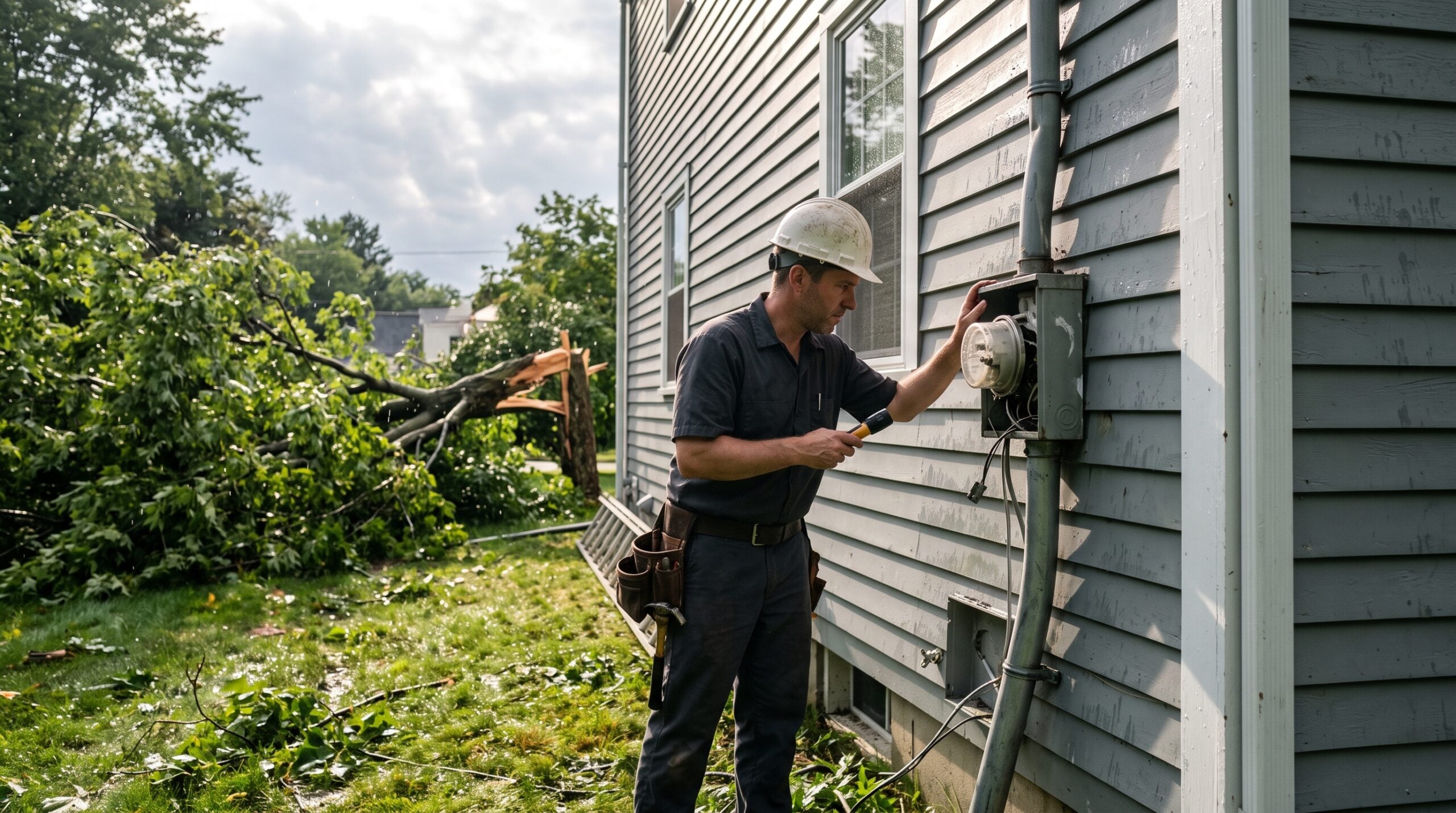
Emergency Electrical Repair in New Hampshire
Sparking outlets, burning odors, repeated breaker trips, and sudden electrical failures can put your home and family at risk. Heritage Home Service provides emergency electrical repair in New Hampshire for electrical problems that require prompt professional attention. If you suspect an immediate electrical hazard, stay away from the affected area and call for professional help.
What Is Considered an Electrical Emergency?
An electrical problem should be treated as an emergency when it creates an immediate risk of fire, electric shock, or serious damage to your home’s electrical system.
Warning signs that deserve prompt attention include:
- Sparks from outlets, switches, or electrical panels
- Burning or melting odors
- Smoke coming from electrical equipment
- Hot or scorched outlets and switches
- Buzzing or crackling from the electrical panel
- Breakers that repeatedly trip
- Electrical equipment exposed to water
- Partial power loss inside the home
- Sudden electrical failures with signs of overheating
- Damaged electrical wiring
- Problems following a storm or power event
If there is an active fire, smoke, or another immediate threat to people or property, leave the area and contact emergency services first.
Do not touch exposed wiring or electrical equipment that may be energized.
What Should You Do During an Electrical Emergency?
Electrical problems require caution. Unlike many household repairs, electricity can seriously injure someone before there is an obvious warning.
Stay Away From Exposed Wiring
Never touch a loose, damaged, or exposed electrical wire. Treat it as energized unless a qualified professional has confirmed otherwise.
Do Not Touch Wet Electrical Equipment
If water has reached outlets, wiring, appliances, or the electrical panel, stay away from the affected area. Do not enter standing water to reach electrical equipment.
Stop Using Hot or Sparking Devices
If an outlet, switch, appliance connection, or other electrical component is sparking or unusually hot, stop using it.
Do Not Keep Resetting a Breaker
A circuit breaker that repeatedly trips is responding to a problem. Continually resetting it without identifying the cause can create additional risk.
Call for Professional Help
If you cannot determine that the situation is safe, do not attempt electrical repairs yourself.
Have an urgent electrical problem in New Hampshire? Call Heritage Home Service for professional emergency electrical repair.
Why Is My Circuit Breaker Repeatedly Tripping?
A breaker is designed to interrupt electrical flow when conditions become unsafe.
An occasional trip may occur because too many devices are being used on one circuit. A breaker that trips repeatedly can indicate a more serious problem.
Possible causes include:
- An overloaded circuit
- A short circuit
- A ground fault
- Damaged wiring
- A faulty appliance
- A problem with the breaker
- Another electrical system fault
Do not replace a breaker with one rated for more current simply to stop it from tripping. Electrical circuits and wiring are designed for specific loads, and changing protection without properly evaluating the circuit can create a fire hazard.
If the breaker immediately trips again after being reset or repeatedly interrupts the same circuit, schedule professional [electrical repair].
What Should You Do If an Outlet Starts Sparking?
A brief spark can occasionally occur when plugging certain devices into an outlet, but repeated, large, unusual, or unexplained sparks deserve attention.
Stop using the outlet if you notice:
- Repeated sparking
- Black or brown discoloration
- A burning smell
- Melted plastic
- Heat around the outlet
- Crackling or buzzing
- Smoke
Do not remove the outlet cover or attempt to inspect energized wiring yourself.
An electrician can determine if the problem involves the receptacle, wiring, connections, circuit, or another component.
What Does a Burning Electrical Smell Mean?
A burning or melting odor can indicate overheating electrical materials and should not be ignored.
Possible sources include wiring, outlets, switches, electrical panels, appliances, or connections.
If you smell burning and cannot identify a safe, non-electrical source, stop using the affected equipment and keep away from the area.
Visible smoke or fire requires emergency services.
Even when the smell disappears, the underlying electrical problem may remain. Have the system inspected before returning the affected circuit or equipment to normal use.
Why Is My Electrical Panel Buzzing?
Electrical panels can produce some normal operational sounds, but loud buzzing, crackling, popping, or other new noises can indicate a problem.
Potential causes may involve:
- Loose electrical connections
- Breaker problems
- Arcing
- Overheating
- Damaged components
- Other panel faults
Do not remove the panel cover to investigate.
Electrical panels contain energized components that can remain dangerous even when individual breakers are switched off. Panel diagnosis and repair should be performed by a qualified electrician.
Is Partial Power Loss an Electrical Emergency?
It can be.
First determine if the outage affects your neighborhood. If nearby homes and streetlights are also without power, the issue may be with the utility.
If only part of your house has lost power, check for a tripped breaker only when it is safe to do so.
Professional electrical service may be necessary when:
- Breakers will not reset
- Power repeatedly cuts out
- Outlets are hot or discolored
- You hear buzzing or crackling
- There is a burning odor
- Lights flicker significantly before power fails
- Only certain areas of the house have unexplained power problems
These symptoms can point to a problem within the home’s electrical system.
Are Flickering Lights an Emergency?
Not every flickering light requires emergency service.
One flickering lamp may simply have a loose bulb or a problem with the fixture. Flickering throughout several rooms, especially when combined with other electrical symptoms, deserves closer attention.
Contact an electrician promptly if flickering occurs alongside:
- Burning odors
- Buzzing
- Sparking
- Hot outlets
- Repeated breaker trips
- Significant changes in brightness
- Partial power loss
The cause could involve wiring, connections, circuits, the electrical panel, or another part of the system.
What Should You Do If Water Reaches Electrical Wiring?
Water around electrical equipment requires extra caution.
Plumbing leaks, burst pipes, basement flooding, roof leaks, and severe storms can expose wiring and electrical components to moisture.
Do not:
- Touch wet outlets or switches
- Enter standing water near electrical equipment
- Handle wet electrical cords
- Open a wet electrical panel
- Attempt to disconnect equipment while standing in water
Keep people away from the area and contact the appropriate professionals.
Water-damaged electrical components may need inspection or replacement before they can be safely used again.
Can New Hampshire Storms Cause Electrical Emergencies?
Yes. New Hampshire weather can put residential electrical systems under considerable stress.
Winter storms can bring heavy snow, ice, wind, and power interruptions. Summer thunderstorms can also cause outages and electrical disturbances.
After severe weather, homeowners may encounter:
- Damaged service equipment
- Power surges
- Partial power loss
- Damaged outdoor electrical components
- Tripped breakers
- Electrical equipment exposed to water
- Problems when utility power returns
Never approach a downed power line. Keep well away and report it to the utility or emergency authorities.
If the utility has restored service but your home continues experiencing electrical problems, an electrician can determine if the issue is within your property.
Can a Power Surge Damage My Electrical System?
A power surge is a sudden increase in voltage that can affect electronics, appliances, and electrical equipment.
Surges can result from several sources, including events within the home and disturbances to the electrical supply.
Signs of possible damage may include:
- Electronics that suddenly stop working
- Tripped breakers
- Burning odors
- Damaged outlets
- Electrical equipment behaving unusually
If a surge appears to have caused broader electrical problems, professional inspection can help identify damaged components.
Homeowners concerned about future voltage spikes can also ask about [whole-home surge protection].
When Is an Electrical Panel Problem an Emergency?
The electrical panel distributes power throughout the house and contains critical circuit protection.
Some panel problems should be addressed immediately.
Call for professional help if you notice:
- Burning smells from the panel
- Smoke
- Visible sparking
- Significant heat
- Scorch marks
- Crackling or popping
- Breakers repeatedly tripping
- Signs of water inside or around the panel
Do not remove the cover or reach inside the panel.
If the existing equipment is damaged, deteriorated, or no longer appropriate for the home’s electrical demands, the electrician may recommend repair or an [electrical panel upgrade] depending on what the inspection finds.
What Happens During an Emergency Electrical Repair?
Safety comes first.
1. Assess the Immediate Hazard
The electrician evaluates the symptoms and determines which part of the electrical system may be affected.
2. Identify the Cause
The system is inspected to determine why the failure occurred rather than simply addressing the visible symptom.
3. Make the Area Safe
The affected circuit or equipment may need to remain out of service until the problem can be corrected.
4. Complete the Appropriate Repair
The electrician repairs or replaces the affected components when appropriate.
5. Test the System
After repair, relevant parts of the system are checked for proper operation.
If the emergency reveals a larger electrical issue, Heritage can explain what additional work may be appropriate.
Should You Make Emergency Electrical Repairs Yourself?
Electrical troubleshooting and repair can expose homeowners to shock, burns, fire, and other hazards.
Avoid attempting repairs involving:
- Electrical panels
- Exposed wiring
- Burned outlets
- Damaged circuits
- Wet electrical equipment
- Service equipment
- Unknown electrical faults
Turning off a device or avoiding an affected area is different from dismantling electrical equipment.
When you see signs of overheating, arcing, damaged wiring, or another potentially dangerous condition, professional diagnosis is the safer choice.
Why Choose Heritage Home Service for Emergency Electrical Repair?
Heritage Home Service is a family-owned home services company serving homeowners throughout New Hampshire and Northern New England.
Our electricians can diagnose urgent electrical problems and determine the repair needed to restore safe operation. Heritage also provides broader electrical services, including outlet and switch replacement, wiring services, panel upgrades, lighting, surge protection, and generator installation.
That means an emergency visit can also identify the appropriate next service if the immediate failure is related to a larger problem with the home’s electrical system.
Concerned that an electrical problem could be unsafe? Contact Heritage Home Service for emergency electrical service in New Hampshire.
Emergency Electrical Repair in NH
FAQs
-
What electrical problems should be treated as emergencies?
Sparking, smoke, burning odors, exposed wiring, hot electrical components, water around energized equipment, and significant unexplained power problems should receive prompt attention. Active fire or an immediate threat to life requires emergency services.
-
Should I reset a breaker that keeps tripping?
Do not repeatedly reset a breaker that continues to trip. Repeated tripping can indicate an overload, short circuit, ground fault, damaged wiring, or another problem that should be diagnosed.
-
Is a burning smell from an outlet dangerous?
It can indicate overheating or damaged electrical components. Stop using the affected outlet and have it professionally inspected. If you see smoke or fire, leave the area and contact emergency services.
-
What should I do if my electrical panel is sparking?
Stay away from the panel and do not remove its cover. Sparking can indicate a serious electrical fault. If there is smoke, fire, or an immediate threat, contact emergency services.
-
Can I use electrical equipment after it gets wet?
Do not assume wet electrical equipment is safe simply because it has dried. Water exposure can damage electrical components. Have affected equipment evaluated before returning it to service.
-
Why did only part of my house lose power?
A tripped breaker or problem with a particular circuit may cause partial power loss, but other electrical faults can produce similar symptoms. If breakers will not reset or the outage is accompanied by burning smells, buzzing, heat, or other warning signs, contact an electrician.
Get Emergency Electrical Help in New Hampshire
One Trusted New Hampshire Team for All Your Emergency Electrical Needs
Electrical warning signs should never be ignored when there is a risk of shock, fire, or further damage. If you notice sparking, burning odors, an overheating panel, exposed wiring, repeated breaker trips, or another urgent electrical problem, keep away from the affected equipment and get professional help.
Call Heritage Home Service for emergency electrical repair in New Hampshire and get an experienced electrician working on the problem as soon as possible.


Financing Made Easy
When you choose Heritage, you can rest easy knowing that we provide straightforward options to help you budget for a complete solution that will last you for decades to come.
VIEW FINANCING OPTIONS

Home Advantage Membership
With Home Advantage Membership, enjoy peace of mind knowing your home’s plumbing, heating, cooling, and electrical needs are handled year after year—hassle-free, with added benefits.
VIEW MEMBERSHIP
What Our Customers Are Saying
Zach did an amazing job on maintaining our HVA system.. It was a pleasure to have him at our home working as a technician. We were very impressed how clean it came out
Show More
Ellen Noon
Installed new bathroom fan. Tyler was very knowledgeable, professional, and efficient. Took time to explain installation and show me photos. Cleaned up after installation. Great communication from Heritage and Tyler.
Show More
Ellen Stanford
Angel was very thorough in describing the work he performed and noting that our system could use additional cleaning to ensure its longevity. I appreciated his knowledge and patience.
Show More
Douglas Cote
Nicholas provided exceptional service and was very thorough. He also answered questions I had and was very knowledgeable. Thank you
Show More
Gloria Hallett
Tech was great! $1140 seems a little steep for two shut off replacements and a faucet install 1.5hrs total labor…but I guess you get what you pay for, and Zach was great.
Show More
Brady Patterson
He was very efficient and detailed. He explained exactly what was done and what was going on with my furnace. Very personable and professional. I would recommend Heritage Home Services.
Show More
paula garabedian
John came out to fix a faulty dryer outlet and did a great job. He clearly knows his work. He found the problem quickly and fixed it right the first time. What I appreciated most was how well he explained everything: what caused the issue, how he fixed it, and what to watch for going forward. He answered all my questions patiently and never made me feel rushed. The price was a bit on the higher side, but the quality of the work and the peace of mind made it worth it. I’d definitely call him again and recommend him to anyone needing electrical work.
Show More
Tony Loyd
Kyle and his team were great. The communication before and during the service were fantastic. Very knowledgeable. Also worked cleanly and efficiently. Would use him and his team again.
Show More
Bill Curry
I had a wonderful experience with Heritage Plumbing Company, especially with Chris, the technician who serviced our heating system today. He arrived on time, communicated throughout the process, and did an excellent job. He was professional, knowledgeable, and made sure everything was taken care of. My tenants are very pleased with the service, and so am I! It’s such a relief to work with someone who is reliable, courteous, and takes pride in their work. Thank you, Chris, for the excellent service. Highly recommend!
Show More
Rossy Concepcion
The guys were great. Corey went thru all steps they were taking and took the time to answer questions. I felt comfortable they knew what they were doing. Great job
Show More
Nicole Martin
Schedule a comprehensive service near you!
Whether you need routine maintenance, repair, or new installation – we have you covered.