
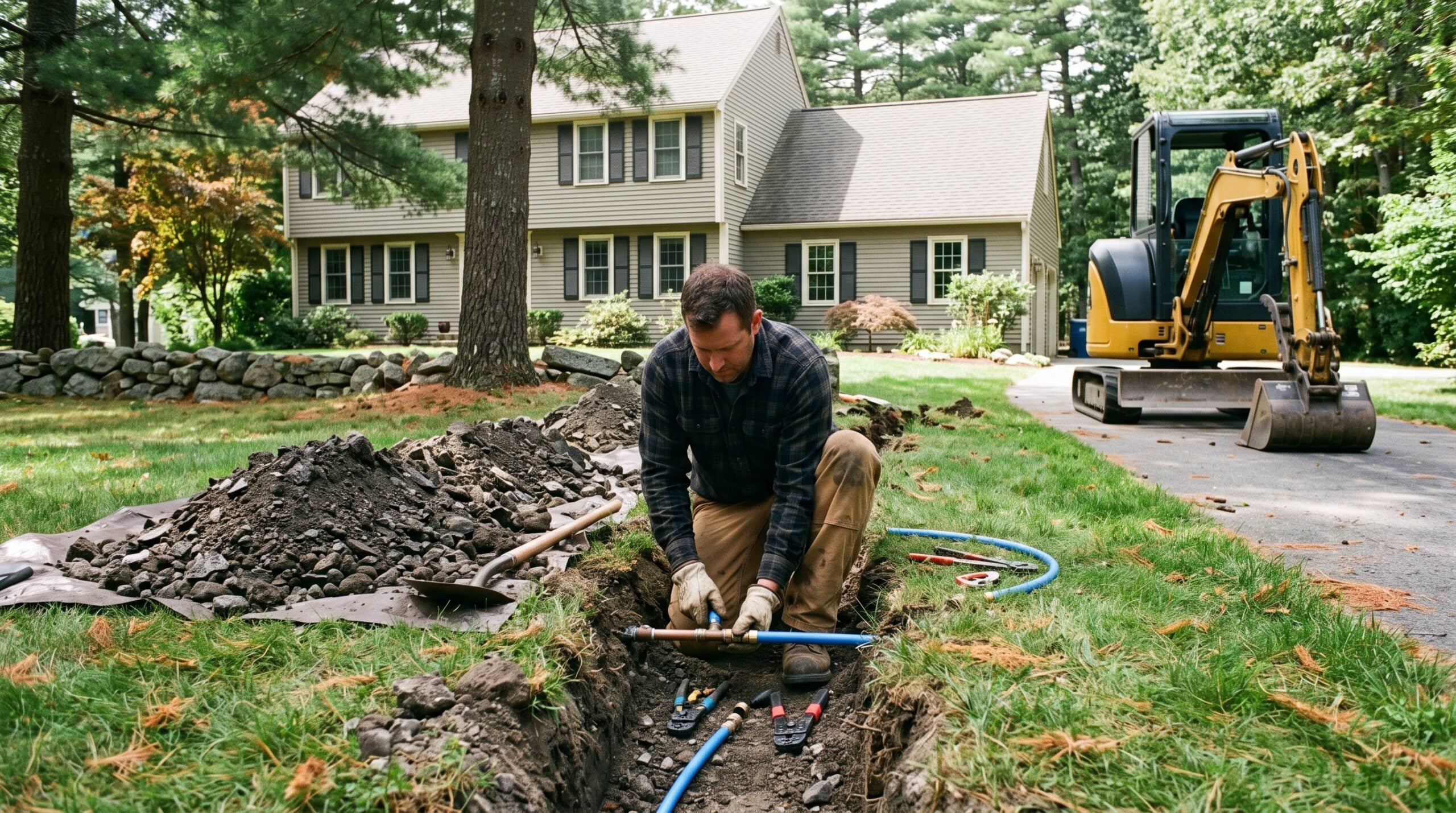
Trenchless Pipe Repair & Replacement in New Hampshire
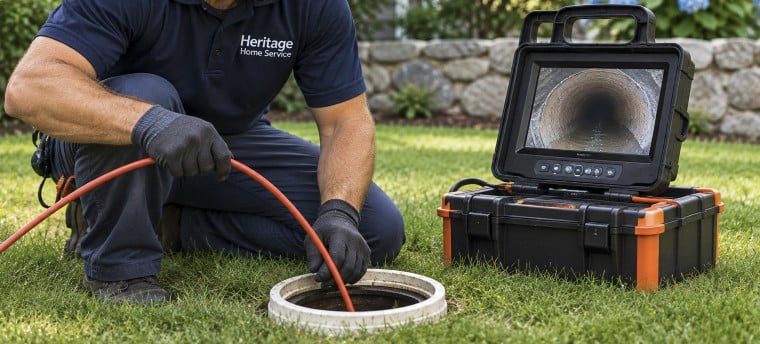
A broken underground pipe doesn’t have to mean destroying your lawn, driveway, or stone walls. Heritage Home Service provides trenchless pipe repair and replacement in New Hampshire, helping homeowners address damaged sewer lines with less excavation. Our family-owned company understands the challenges of older plumbing, tree roots, rocky soil, and New England winters. We inspect underground pipes, explain available repair methods, and recommend practical solutions that protect your home and property.
Key Takeaways
- Trenchless technology repairs or replaces many underground sewer pipes without digging a continuous trench.
- Pipe lining seals cracks and damaged joints inside existing pipes.
- Pipe bursting replaces deteriorated lines using smaller access openings.
- Recurring backups, sewage odors, gurgling drains, and wet yard areas can indicate underground damage.
- Older clay and cast iron pipes are vulnerable to corrosion, root intrusion, and ground movement.
- Camera inspections help determine whether trenchless repair or traditional excavation is appropriate.
What Is Trenchless Pipe Repair?
Trenchless pipe repair fixes underground plumbing while minimizing excavation. Instead of digging along the entire damaged pipe, plumbers use specialized equipment through existing access points or smaller openings.
This approach helps preserve outdoor features such as:
- Established lawns and landscaping
- Asphalt and gravel driveways
- Stone walls and walkways
- Patios, gardens, and mature trees
- Retaining walls and other hardscaping
Trenchless methods are particularly helpful when a sewer line runs beneath areas that would be expensive or difficult to restore.
However, not every damaged pipe qualifies. The condition, alignment, material, and accessibility of the line determine which repair method is suitable.
How Do Pipe Lining and Pipe Bursting Work?
Two common trenchless methods are cured-in-place pipe lining and pipe bursting. Each addresses different underground plumbing problems.
Pipe Lining: Repairing Pipes From the Inside
Cured-in-place pipe lining (CIPP) creates a new interior surface inside an existing sewer pipe.
The process typically involves cleaning the damaged line, inserting a resin-coated liner, and curing it against the pipe’s interior walls.
Once hardened, the liner seals cracks, leaking joints, and other suitable defects.
Pipe lining may be appropriate for:
- Cracked clay sewer pipes
- Leaking pipe connections
- Minor corrosion-related damage
- Root intrusion through damaged joints
The original pipe must remain suitable for lining. Severely collapsed or misaligned sections may require replacement.
Pipe Bursting: Replacing Damaged Underground Pipes
Pipe bursting replaces an existing underground pipe without excavating its entire length.
A specialized bursting head travels through the old pipe, breaking it outward while pulling a new replacement pipe into place.
The process generally requires access openings near both ends of the work area.
Pipe bursting may be recommended when a sewer line has extensive deterioration or repeated failures that make lining impractical.
Concerned about underground pipe damage? Contact Heritage Home Service to schedule a sewer inspection in New Hampshire.
What Are the Warning Signs of Underground Pipe Damage?
Underground pipe problems often develop gradually. Recognizing early symptoms can help prevent sewage backups and extensive property damage.
Watch for these warning signs:
- Recurring sewage backups: Repeated backups may indicate a damaged or obstructed main sewer line.
- Gurgling drains: Unusual noises from toilets or sinks can suggest restricted sewer flow.
- Sewage smells: Persistent odors indoors or outdoors may indicate leaking sewer pipes.
- Wet spots in the yard: Unexplained soggy ground can signal an underground leak.
- Sinkholes or settling soil: Ground depressions may develop when leaking pipes wash away surrounding soil.
- Multiple slow drains: Several fixtures draining poorly together can indicate a main sewer problem.
Water service line problems may produce different symptoms, including reduced water pressure, unexplained water bills, or wet ground between the house and street.
These signs warrant professional diagnosis rather than repeated temporary drain cleaning.
Why Do Older New Hampshire Homes Need Trenchless Pipe Repair?
Many established neighborhoods in Manchester, Nashua, and Concord contain older homes with clay or cast iron sewer piping.
Although these materials were widely used for decades, aging pipes can develop cracks, corrosion, and failing joints.
Clay Sewer Pipes and Tree Roots
Older clay sewer pipes often have multiple joints that can separate as surrounding soil shifts.
Tree roots naturally grow toward moisture and may enter through small openings. Once inside, roots expand and collect debris, eventually restricting drainage.
Pipe lining can seal suitable damaged joints after roots and buildup are removed.
Cast Iron Pipe Deterioration
Cast iron sewer pipes may corrode internally over time. Rust buildup can narrow the passage, while advanced deterioration weakens the pipe walls.
A camera inspection helps determine whether lining is possible or replacement is necessary.
Winter Freezing and Ground Movement
New Hampshire’s freezing winters and spring thaws can shift surrounding soil.
Frost heave and settlement may stress older pipe connections, causing separation or misalignment.
Trenchless methods can address some resulting damage, but severely displaced pipes may require excavation.
What Happens During a Trenchless Pipe Repair?
A professional assessment helps determine the safest and most effective repair method.
The typical process includes:
- Sewer camera inspection: A waterproof camera identifies cracks, roots, blockages, and deteriorated sections.
- Pipe condition assessment: Technicians evaluate the damage, pipe material, alignment, and accessibility.
- Repair recommendation: Heritage explains whether lining, bursting, or excavation is appropriate.
- Pipe preparation: Crews clean the line and prepare the necessary access points.
- Repair or replacement: The selected method restores the damaged pipe or installs a replacement.
- Final inspection: Technicians verify the completed work and confirm proper drainage.
Underground water service lines require separate leak detection and evaluation. Depending on their condition and location, these lines may need conventional excavation or an appropriate trenchless replacement technique.
Trenchless Repair vs. Traditional Excavation: Which Is Better?
Trenchless repair generally causes less surface disruption, while traditional excavation provides direct access to severely damaged underground plumbing.
Trenchless repair may be preferable when:
- The pipe remains suitable for lining or bursting.
- The line runs beneath a driveway or stone walkway.
- Homeowners want to preserve landscaping.
- Access points and underground conditions support the equipment.
Traditional excavation may be necessary when:
- A pipe has completely collapsed.
- Significant misalignment prevents trenchless repairs.
- Underground utilities interfere with access.
- Pipe grading or connections require correction.
Heritage provides both trenchless services and traditional excavation. Our plumbers explain the available options before work begins.
Why Choose Heritage Home Service for Underground Pipe Repairs?
Heritage combines experienced plumbing professionals with family-owned values and long-standing New England service.
Our services include sewer camera inspections, pipe lining, pipe bursting, traditional excavation, drain cleaning, and underground water line repairs.
We help homeowners throughout New Hampshire, including Manchester, Nashua, Concord, Bedford, Portsmouth, and surrounding communities.
Our approach emphasizes accurate diagnosis, clear recommendations, upfront estimates, and respect for your property.
For additional information, visit our New Hampshire sewer line services and excavation and underground pipe services.
Frequently Asked Questions About Trenchless Pipe Repair in New Hampshire
-
How much does trenchless pipe repair cost?
Costs depend on pipe length, depth, material, accessibility, and damage severity. Trenchless methods may reduce landscaping restoration expenses, but pricing varies. Heritage provides estimates after evaluating the pipe.
-
How long does trenchless pipe repair last?
Properly installed pipe liners and replacement pipes can provide decades of service. Actual lifespan depends on materials, installation quality, and underground conditions.
-
Does trenchless repair require digging?
Some digging may be necessary for access openings. However, trenchless methods generally avoid excavating a continuous trench across the property.
-
Can trenchless technology repair water lines?
Certain underground water lines may qualify for trenchless replacement. The appropriate method depends on pipe material, location, utility requirements, and site conditions.
-
How long does trenchless repair take?
Some residential pipe lining projects can be completed in one or two days. Larger replacements or difficult underground conditions may require additional time.
Schedule Trenchless Pipe Repair & Replacement in New Hampshire
Don’t wait for recurring backups or underground leaks to become major property problems.
Heritage Home Service provides professional sewer inspections, trenchless pipe repairs, underground pipe replacement, and traditional excavation throughout New Hampshire.
Call Heritage Home Service today to schedule a sewer camera inspection, discuss your repair options, and request an estimate for trenchless pipe repair or replacement in New Hampshire.


Financing Made Easy
When you choose Heritage, you can rest easy knowing that we provide straightforward options to help you budget for a complete solution that will last you for decades to come.
VIEW FINANCING OPTIONS

Home Advantage Membership
With Home Advantage Membership, enjoy peace of mind knowing your home’s plumbing, heating, cooling, and electrical needs are handled year after year—hassle-free, with added benefits.
VIEW MEMBERSHIP
What Our Customers Are Saying
Warren was extremely knowledgeable and familiar with my home and what’s going on with it. There was no pressure, and he even gave us a few tips to help save a bit of money! As a new homeowner, this was wonderful! Will definitely be booking service in the near future!
Show More
Marae Perruzzi
I ask Heritage Home Service for a Licensed plumber to come to my home to fill out Water Flow Form for Water Efficiency. Gladly the plumber came and checked everything and filled out the form without charging me. It’s a great company to start with. They are understanding what the customer is looking for. Thank you Heritage.
Show More
gmej
Michael arrived promptly on appointment time. Was very respectful and communicative on my first annual service on my new boiler system. A+++
Show More
BeachBoi08
The heritage team, Cory, and Edgar, We’re very professional, courteous and conscious not to interrupt anything in a person‘s home. I was very impressed with their knowledge and their assessment of what was going on. Excellent.
Show More
Jewel Church
Jim was very courteous and helpful. Unfortunately he was unable to fix the problem that I was having but he did the best he could and it was not his fault that he couldn’t fix the problem. I was not charged for the service which I am very much appreciated
Show More
Mary Fuller
We had a plumbing leak in our half bath in the basement. I looked online for a plumber near me and heritage home service was the first to come up. It said it was family owned and had been in business for 30 years so I felt that was a good advertising point. I called them. They told me that someone would be by that afternoon And they gave me a 4-Hour window. A young man named Ben called and said he was running ahead of schedule and would we mind if he stopped by early. Early? A rarity. So he stopped by. Took a look at our situation. Gave us a quote and got to work. He was done within 40 minutes, he kept the area clean and the commotion minimal. He was very personable and very professional. I highly recommend.
Show More
Marcia Fanning
Jim was great. Immediately pinpointed the issue, and just like that… fixed. Very grateful he fixed, definitely will use their service again
Show More
Viviann C
Fast clean and professional couldn’t ask for anything more very polite took the time to answer all my questions and point things out to me so much so that I signed up for the yearly service
Show More
Bob Mele
Todd did excellent work and was both friendly and informative. Once again, excellent work and service from Heritage. Thank you!
Show More
Carol D.
Eric was a pleasure to have as a service tech work our furnace today in Alton. He was promt, proficient and professional in every aspect. He gave a detailed explanation for everything he did in cleaning and evaluating our furnace on School St..
Show More
Ronald Breth
Schedule a comprehensive service near you!
Whether you need routine maintenance, repair, or new installation – we have you covered.