
Hot water is essential for bathing, washing dishes, doing laundry, and keeping a home sanitary. When your water heater stops working, leaks, or produces inconsistent temperatures, professional service can identify the cause and help prevent the problem from becoming more disruptive.
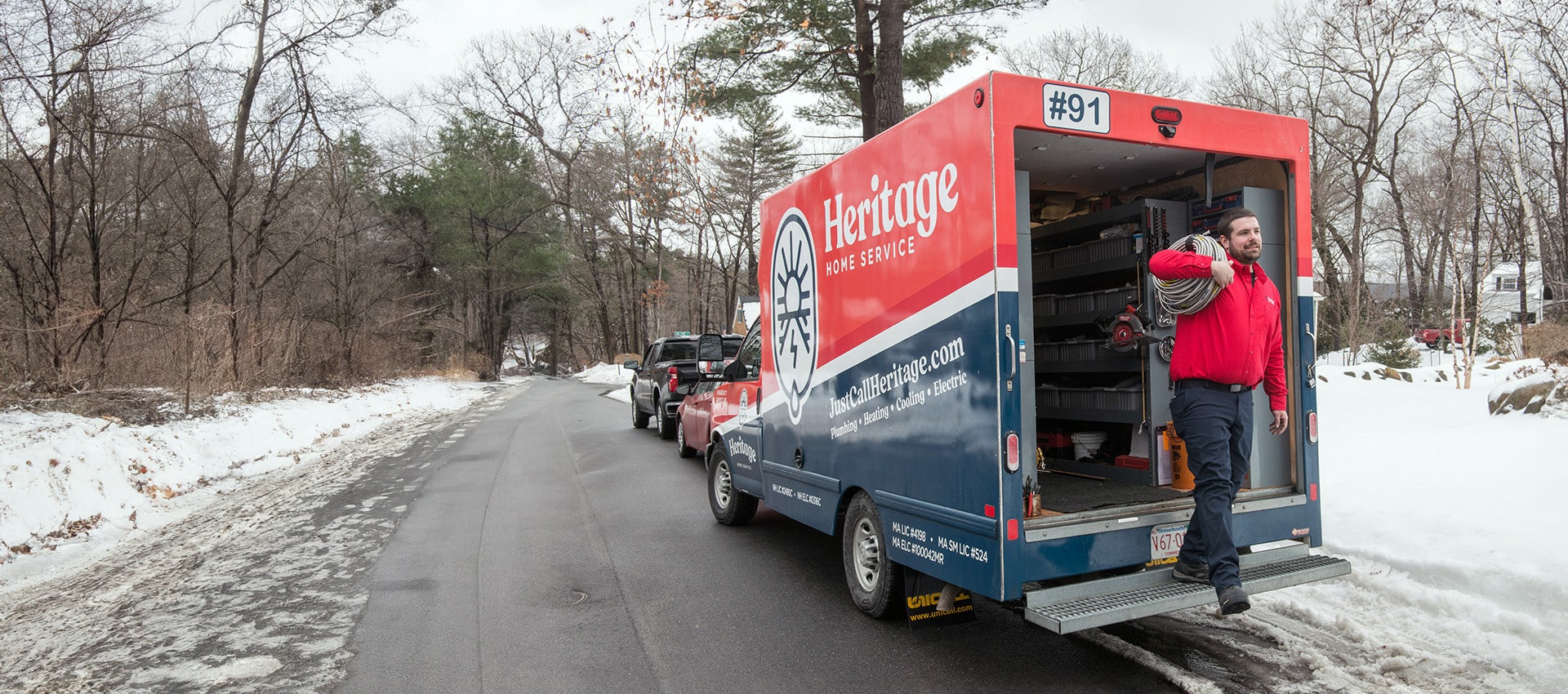
Heritage Home Service provides water heater repair in Maine for conventional tank and tankless systems. Our family-owned team carefully diagnoses water heater problems, explains the available options, and works to restore dependable hot water to your home.
Need your hot water restored? Call Heritage Home Service today for reliable water heater repair in Maine.

What Are the Signs Your Water Heater Needs Repair?
Some water heater failures happen suddenly, but many begin with changes in performance. Prompt attention may help prevent a complete loss of hot water or extensive water damage.
Contact a plumber if you notice:
- No hot water
- Water that does not get hot enough
- Hot water that runs out unusually quickly
- Temperatures that change without warning
- Water leaking around the unit
- Rust-colored or cloudy hot water
- Unpleasant odors from hot water
- Popping, rumbling, or banging noises
- Low hot-water pressure
- A pilot light that will not remain lit
- A circuit breaker that repeatedly trips
- Error codes on a tankless system
- A tankless unit that shuts down during use
- Visible corrosion on the tank or connections
- Moisture around valves or piping
These symptoms can result from several different problems. Professional testing is necessary to determine whether the water heater needs cleaning, adjustment, component replacement, or complete replacement.
Why Is My Water Heater Not Producing Hot Water?
A complete loss of hot water may have a relatively simple cause or indicate a failed component.
Potential causes include:
- A tripped circuit breaker
- Failed electric heating elements
- A faulty thermostat
- Ignition or pilot-light problems
- A gas supply issue
- A malfunctioning control valve
- A damaged temperature sensor
- Tankless system error conditions
- Mineral accumulation
- A failed control board
- Safety controls shutting down the unit
Avoid repeatedly resetting the water heater. A breaker or safety switch that continues to trip may indicate an electrical fault, overheating condition, or another problem requiring professional diagnosis.
If you smell gas, leave the area and contact the appropriate emergency service or utility provider from a safe location. Do not operate electrical switches, use an open flame, or attempt to relight the unit.
Why Does My Hot Water Run Out So Quickly?
Running out of hot water sooner than usual can be caused by increased household demand, incorrect temperature settings, sediment buildup, or failing internal components.
Common possibilities include:
- A damaged electric heating element
- An inaccurate or faulty thermostat
- Heavy sediment inside the tank
- A broken dip tube
- An undersized water heater
- Simultaneous use of several hot-water fixtures
- A mixing or plumbing crossover problem
- An aging unit that has lost performance
A plumber can compare the system’s output with household demand. If the water heater is working properly but lacks sufficient capacity, replacement with a properly sized tank or tankless model may be worth considering.
What Causes a Water Heater to Leak?
A leak can originate from the tank, piping connections, valves, drain assembly, or nearby plumbing. The source must be identified before the correct solution can be recommended.
Possible causes include:
- Loose or deteriorated connections
- A leaking drain valve
- A problem with the temperature and pressure relief valve
- Excessive water pressure
- Thermal expansion
- Corrosion
- A damaged internal tank
- Condensation
- Leaking pipes above or beside the water heater
A leaking connection or valve may be repairable. A corroded or ruptured storage tank generally requires water heater replacement because the tank itself typically cannot be permanently repaired.
Water near the unit should never be ignored. Even a small leak can damage floors, walls, ceilings, or belongings over time.
What Should You Do If Your Water Heater Is Leaking?
If you discover an active leak:
- Keep children and pets away from the area.
- Avoid standing water near electrical equipment.
- Turn off electrical power or fuel only if you can safely follow the correct procedure.
- Close the water supply valve to the unit if it is accessible and safe to operate.
- Move nearby belongings away from the water.
- Contact a plumber promptly.
Do not plug the relief valve or cap a leaking discharge pipe. The temperature and pressure relief valve is an important safety device that must be evaluated by a professional.
If water is near an electrical panel, wiring, outlets, or appliances, do not enter the affected area. Contact the appropriate emergency professionals.
Why Is My Water Heater Making Noise?
Some operational sounds are normal. New or increasingly loud popping, banging, rumbling, sizzling, or screeching should be investigated.
In a tank-style water heater, popping and rumbling often occur when sediment collects on the bottom of the tank. Water can become trapped beneath the buildup, creating noise as it heats and moves through the sediment.
Other causes may include:
- Scale on electric heating elements
- Water pressure problems
- A partially closed valve
- Expansion and contraction of metal
- Loose components
- Burner or ignition problems
- Restricted water flow
- A tankless unit that needs maintenance
Noise does not automatically mean the system must be replaced. The unit’s age, condition, repair history, and the source of the sound determine the appropriate response.
Why Does Maine Water Contribute to Water Heater Problems?
Water conditions vary across Maine. Some homes receive municipal water, while others depend on private wells. Minerals in the water can accumulate inside both tank and tankless water heaters.
Scale and sediment may:
- Reduce heat transfer
- Increase operating noise
- Restrict water flow
- Affect heating elements
- Reduce available hot water
- Place extra strain on components
- Contribute to premature wear
Periodic maintenance based on the manufacturer’s recommendations and local water conditions can help manage buildup. Tankless systems may require descaling, while storage tanks may benefit from professional flushing when appropriate.
Homeowners with private wells should also consider how sediment, water chemistry, and treatment equipment affect the plumbing system.
Can Tankless Water Heaters Be Repaired?
Yes. Tankless water heaters contain burners or heating elements, flow sensors, heat exchangers, fans, valves, electronic controls, and other serviceable components.
Common tankless water heater problems include:
- Error codes
- Inconsistent temperatures
- Failure to ignite
- Mineral buildup
- Restricted flow
- Clogged inlet screens
- Venting problems
- Frozen condensate or water lines
- Faulty sensors
- Electrical or control failures
- A unit that shuts down during high demand
Because tankless systems use combustion, high-powered electrical components, or both, internal diagnosis and repair should be left to a qualified professional.
What Happens During a Water Heater Repair Visit?
The service process begins with understanding the symptoms and evaluating the unit safely.
A typical appointment may include:
- Reviewing the problem: The plumber asks about temperature changes, noises, odors, leaks, error codes, and when the symptoms began.
- Inspecting the water heater: The tank, accessible connections, valves, controls, piping, venting, and surrounding area are examined as applicable.
- Testing the system: Diagnostic steps are used to evaluate thermostats, heating elements, ignition components, sensors, or other parts.
- Identifying the cause: The technician determines whether the problem involves a repairable component, maintenance issue, plumbing condition, or failed tank.
- Explaining the options: You receive a clear description of the recommended work.
- Completing an authorized repair: When conditions and parts availability allow, the damaged component is repaired or replaced.
- Confirming operation: The system is tested for proper heating, safe operation, and visible leaks.
If replacement is the more practical option, the plumber can explain why and help you compare suitable systems.
Should You Repair or Replace Your Water Heater?
Repair may make sense when the unit is in generally good condition, the problem involves a replaceable component, and the repair is likely to provide dependable service.
Replacement may be more appropriate when:
- The storage tank is leaking
- The unit requires frequent repairs
- Corrosion is widespread
- Hot-water capacity no longer meets household needs
- Replacement parts are unavailable
- A major component has failed
- Energy use has increased substantially
- The water heater has significant safety concerns
- Repair cost is high relative to the system’s condition
- The equipment is approaching the end of its expected service life
Age is only one consideration. Installation quality, water conditions, maintenance history, usage, and the unit’s present condition also affect the decision.
Tank or Tankless: Which Replacement Is Better?
If repair is no longer practical, homeowners may choose between another storage-tank unit and a tankless water heater.
Storage-Tank Water Heaters
Tank models store a set amount of heated water for use throughout the day. They are familiar, available in several capacities, and often have a lower initial installation cost than tankless systems.
Their available hot water is limited by tank capacity and recovery rate. They also continuously maintain the stored water’s temperature.
Tankless Water Heaters
Tankless units heat water as it flows through the system. They can provide extended hot-water delivery when correctly sized and used within their capacity.
Installation may require changes to gas service, venting, electrical supply, or other infrastructure. Tankless equipment also needs periodic maintenance, especially in homes with mineral-heavy water.
The best choice depends on household size, hot-water habits, available utilities, installation conditions, budget, and long-term goals.
How Can You Reduce Water Heater Problems?
Homeowners can support reliable operation with a few preventive steps:
- Schedule maintenance according to manufacturer recommendations
- Watch for leaks and corrosion
- Keep the area around the unit clear
- Do not store flammable materials nearby
- Avoid adjusting safety components
- Address unusual noises promptly
- Monitor changes in hot-water capacity
- Consider water treatment when testing supports it
- Protect appropriate plumbing from freezing
- Know how to shut off the water supply in an emergency
- Test household carbon monoxide alarms when fuel-fired equipment is present
Never attempt to drain, flush, disassemble, or repair a water heater unless you have the appropriate knowledge and can follow all manufacturer safety procedures. Hot water, electricity, fuel, and pressure can cause severe injury.
Why Choose Professional Water Heater Repair?
Water heaters combine pressurized water with electricity, combustible fuel, high temperatures, or several of these hazards. Accurate diagnosis and correct repair are essential for safe operation.
Heritage provides neighborly plumbing service backed by long-standing Northern New England roots. Our team understands how Maine winters, household water conditions, and daily demand can affect tank and tankless water heaters.
Homeowners can also call on us for water heater replacement, drain cleaning, sewer line services, leak detection, pipe repairs, HVAC, and electrical needs.
Frequently Asked Questions About Water Heater Repair in Maine
-
How quickly should I address a leaking water heater?
An active leak should be addressed promptly. Water can damage surrounding materials, and a leaking tank may worsen without warning. Shut off the water supply if you can do so safely and contact a plumber.
-
Why is my hot water rusty?
Rust-colored hot water may result from corrosion inside the water heater, a deteriorated internal component, sediment, or problems elsewhere in the plumbing. Compare the hot and cold water and arrange an inspection.
-
Can sediment be removed from a water heater?
In some units, professional flushing may remove loose sediment. The water heater’s age, tank condition, drain-valve condition, and maintenance history should be evaluated before service.
-
Why does my tankless water heater alternate between hot and cold?
Temperature fluctuations may result from flow-rate issues, mineral buildup, sensor problems, plumbing crossover, changing demand, or incorrect system sizing. Professional diagnosis can identify the cause.
-
Is it normal for water to come from the relief valve?
Occasional discharge may indicate excessive temperature, pressure, thermal expansion, or a faulty valve. Never block the valve or its discharge pipe. Have the system evaluated promptly.
-
Can a water heater be repaired during winter?
Yes. Water heater problems can be diagnosed and repaired throughout the year. Maine’s cold weather makes prompt service especially important if the unit or its water lines are at risk of freezing.
-
How can I tell whether the tank itself is leaking?
Water emerging from the tank body or bottom can indicate internal tank failure, but nearby valves and connections may also leak and run down the unit. A plumber should confirm the source
Schedule Water Heater Repair in Maine
Do not let an inconsistent, noisy, or leaking water heater disrupt your household. Professional diagnosis can identify whether the unit needs maintenance, a targeted repair, or replacement.
Contact Heritage Home Service today to schedule dependable water heater repair in Maine.

Financing Made Easy
When you choose Heritage, you can rest easy knowing that we provide straightforward options to help you budget for a complete solution that will last you for decades to come.
VIEW FINANCING OPTIONS
Complete Care Plan
With Complete Care, enjoy peace of mind knowing your home's plumbing, heating, cooling, and electrical needs are handled year after year—hassle-free, with added benefits.
VIEW PLAN