
A slow or clogged drain can interrupt your routine and may signal a larger problem inside your plumbing system. While some minor blockages respond to basic homeowner care, recurring clogs, wastewater backups, and several slow drains often require professional attention.
Heritage Home Service provides professional drain cleaning in Maine for kitchens, bathrooms, laundry rooms, and other residential plumbing fixtures. Our family-owned team works to locate the cause of the blockage, clear the affected line, and help restore reliable drainage to your home.
Dealing with a stubborn clog? Call Heritage Home Service today for dependable drain cleaning in Maine.
What Are the Signs You Need Professional Drain Cleaning?
Drain problems often develop gradually. Water may begin emptying more slowly before the line becomes completely blocked.
Schedule professional drain service if you notice:
- Water draining slowly from sinks, tubs, or showers
- A drain that repeatedly becomes clogged
- Gurgling sounds from plumbing fixtures
- Water backing up into a sink, tub, or shower
- Unpleasant odors coming from a drain
- Toilets that flush slowly or incompletely
- Multiple clogged fixtures
- Standing water around a floor drain
- Water appearing in another fixture when one is used
- Fruit flies or drain flies near plumbing fixtures
- Wastewater backing up into the home
A single slow sink may have a localized blockage. Several affected fixtures can indicate a problem deeper in a branch drain or main sewer line. A plumber can determine where the restriction is located before recommending the appropriate cleaning method.
What Causes Household Drains to Clog?
Residential drains carry water, soap, food residue, hair, and other waste every day. Material can gradually adhere to the inside of a pipe, narrowing the available space until water no longer flows properly.
Common causes of clogged drains include:
- Hair
- Soap residue
- Grease and cooking oil
- Food particles
- Coffee grounds
- Dental floss
- Paper towels and wipes
- Excessive toilet paper
- Personal care products
- Mineral buildup
- Small foreign objects
- Laundry lint
- Tree root intrusion
- Damaged or misaligned pipes
- Corrosion in older plumbing
- Freezing conditions
The blockage’s cause and location determine which solution is appropriate. Removing hair from a shower drain requires a different approach than clearing roots or heavy buildup from a sewer line.
Why Do Kitchen Drains Become Clogged?
Kitchen sink clogs commonly develop when grease, oils, fats, and food scraps enter the drain. Even when grease is poured down with hot water, it can cool and coat the inside of the pipe. Other debris then sticks to that residue and gradually creates a restriction.
Items that should stay out of the kitchen drain include:
- Cooking grease and oil
- Coffee grounds
- Eggshells
- Rice and pasta
- Flour and dough
- Fibrous vegetable scraps
- Bones
- Fruit pits
- Paint
- Household chemicals
A garbage disposal can break certain food scraps into smaller pieces, but it does not prevent grease or starchy foods from causing buildup. Running adequate water and using the disposal only for appropriate materials can reduce problems.
Why Are Bathroom Drains So Prone to Blockages?
Bathroom drains frequently collect hair, soap residue, shaving products, cosmetics, and mineral deposits. These materials can combine into a dense blockage inside a sink, shower, or bathtub drain.
Toilets may become clogged when they receive anything other than human waste and appropriate toilet paper. Products labeled as disposable or flushable can still accumulate in household plumbing or contribute to sewer line problems.
Avoid flushing:
- Wipes
- Paper towels
- Facial tissues
- Cotton swabs
- Feminine hygiene products
- Dental floss
- Diapers
- Cat litter
- Medication
- Household chemicals
A drain screen can help keep hair and debris out of bathroom drains. Cleaning the screen regularly is considerably easier than dealing with a blockage deeper inside the line.
What Happens During Professional Drain Cleaning?
Professional drain cleaning should begin with an evaluation of the symptoms. The plumber may ask which fixtures are affected, when the problem began, and whether previous attempts provided temporary relief.
A typical service process may include:
- Assessing the affected fixtures: The plumber checks drainage speed, backups, odors, and unusual sounds.
- Determining the likely location: The pattern of affected fixtures helps identify whether the clog is local or deeper in the plumbing system.
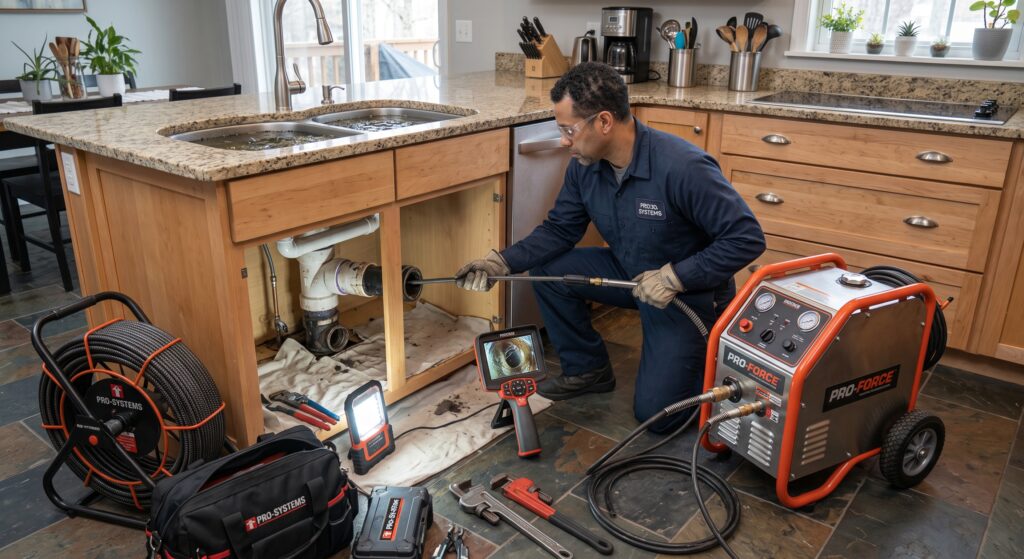
- Inspecting the line when appropriate: A drain or sewer camera may be recommended if recurring clogs, pipe damage, or a main-line obstruction is suspected.
- Choosing a cleaning method: The plumber selects equipment based on the pipe, blockage, access point, and overall condition of the system.
- Clearing the restriction: Professional equipment is used to break through or remove the clog.
- Testing drainage: Water is run through the fixture to confirm improved flow.
- Explaining the findings: The plumber discusses the likely cause and any steps that could reduce future problems.
If the inspection reveals a damaged, collapsed, or severely deteriorated pipe, cleaning alone may not provide a lasting solution. The plumber can explain whether repair or replacement should be considered.
What Drain Cleaning Methods May Be Used?
The correct method depends on the type of clog and condition of the pipe.
Drain Snaking
A drain snake or auger uses a flexible cable and appropriate attachment to reach and break through a blockage. It is commonly used for hair, paper, and other concentrated obstructions.
Snaking can restore flow, but it may not remove all residue coating the inside of the pipe. Recurring buildup may require another approach.
Hydro Jetting
Hydro jetting uses controlled, high-pressure water to clean the inside of suitable drain or sewer pipes. It can remove grease, sludge, soap residue, and certain types of buildup more thoroughly than a basic auger.
This method is not appropriate for every plumbing system. The pipe should be evaluated first because weakened, badly corroded, or damaged lines may not be suitable for high-pressure cleaning.
Camera Inspection
A sewer camera does not clean the pipe, but it can help locate and identify problems. The camera may reveal heavy buildup, roots, cracks, offsets, foreign objects, or other conditions that affect drainage.
Camera inspection can be especially useful when clogs repeatedly return or several fixtures are affected.
Is Chemical Drain Cleaner Safe for Your Pipes?
Store-bought chemical drain cleaners may seem convenient, but they can create risks. Harsh products can damage certain pipes and fixtures, produce dangerous fumes, cause skin or eye injuries, and remain trapped behind a blockage.
Chemical cleaners may also provide only temporary relief if they create a small opening without removing the complete obstruction. They cannot correct tree root intrusion, broken pipes, severe corrosion, or improperly aligned drains.
Never combine drain-cleaning chemicals. Mixing products can cause toxic fumes, heat, or a dangerous chemical reaction.
Before a plumber begins work, tell the technician if you have already put a chemical cleaner into the affected drain. This information helps the plumbing team take appropriate safety precautions.
When Is a Clogged Drain an Emergency?
A single slow drain may not require emergency service, but some situations deserve immediate attention.
Call for prompt plumbing help when:
- Wastewater backs up into the home
- Several drains stop working at once
- A toilet overflows and cannot be stopped
- Sewage enters a bathtub, shower, or floor drain
- Water threatens flooring, walls, or electrical components
- The home has no usable toilet
- A backup creates unsafe or unsanitary conditions
Avoid using plumbing fixtures if doing so causes additional wastewater to enter the home. Keep children and pets away from contaminated areas and avoid direct contact with sewage.
Why Do Drain Problems Return?
A recurring clog generally means that the original blockage was only partially removed or an underlying condition remains.
Repeated drain problems may be caused by:
- Grease coating the pipe
- Roots entering a sewer line
- A foreign object lodged in the drain
- A sagging or misaligned pipe
- Corrosion that restricts the line
- Mineral accumulation
- Damaged sewer piping
- Improper drain slope
- Inappropriate materials repeatedly entering the system
If a drain becomes clogged shortly after it was cleared, additional diagnosis may be needed. A camera inspection can help reveal why the problem keeps returning.
How Can Maine Weather Affect Drains and Sewer Lines?
Maine’s freezing winters can affect plumbing located in unheated or poorly insulated areas. A drain line exposed to prolonged cold may freeze, particularly when it has inadequate slope, limited flow, or an existing partial blockage.
Seasonal temperature changes, saturated soil, and ground movement can also affect underground sewer lines. Tree roots may enter small gaps or damaged areas while searching for moisture, eventually restricting wastewater flow.
Pouring boiling water or applying an open flame to a suspected frozen drain can damage plumbing and create safety hazards. A professional can determine whether the issue involves freezing, an ordinary clog, or pipe damage.
How Can You Help Prevent Clogged Drains?
No plumbing system is completely immune to blockages, but good household habits can reduce preventable problems.
Use this drain-care checklist:
- Place screens over shower and tub drains
- Remove collected hair regularly
- Keep grease and cooking oil out of sinks
- Scrape food scraps into the trash or compost
- Use the garbage disposal only for suitable materials
- Run adequate water when operating the disposal
- Flush only waste and toilet paper
- Keep wipes and hygiene products out of toilets
- Clean accessible drain stoppers
- Address slow drains before they become fully blocked
- Schedule professional help for recurring problems
- Avoid relying on harsh chemical cleaners
Homeowners with older plumbing or a history of main sewer line problems may benefit from proactive inspection or cleaning based on a plumber’s recommendation.
Why Choose Professional Drain Cleaning?
Professional drain cleaning provides more than temporary relief. A plumber can evaluate the pattern of symptoms, select equipment suitable for the pipe, and look for conditions that may cause the problem to return.
Heritage offers neighborly, customer-first plumbing care informed by long-standing Northern New England roots. Our team understands the challenges Maine homes face, including older plumbing, cold weather, and seasonal conditions that can affect underground pipes.
In addition to drain cleaning, homeowners can call on us for sewer camera inspections, pipe repairs, water heater service, plumbing replacements, HVAC, and electrical solutions.
Frequently Asked Questions About Drain Cleaning in Maine
-
Can I use a plunger on a clogged drain?
A plunger may clear certain minor clogs when used correctly. Stop if plunging causes water to back up through another fixture or if chemical cleaner is present in the drain.
-
Why does my sink gurgle when the toilet flushes?
Gurgling can indicate that air is struggling to move through the drainage system. A blockage or venting problem may be affecting the line, particularly when several fixtures show symptoms.
-
Does a slow drain always mean there is a clog?
Usually, slow drainage indicates a restriction, but the cause could include buildup, a foreign object, inadequate venting, damaged piping, or a problem farther down the line.
-
Can professional drain cleaning remove tree roots?
Specialized equipment may remove certain root intrusions and restore flow temporarily or for an extended period. However, roots usually enter through damaged pipe sections. Repair may be necessary to prevent them from returning.
-
How often should drains be professionally cleaned?
There is no single schedule for every home. Plumbing age, household habits, pipe condition, and previous clogs all matter. Recurring slow drainage is a better reason to request service than cleaning lines unnecessarily.
-
Why are several drains clogged at the same time?
Multiple affected fixtures may indicate a blockage in a shared branch drain or the home’s main sewer line. Limit water use and arrange a professional evaluation promptly.
-
Will drain cleaning repair a broken pipe?
No. Cleaning removes appropriate blockages and buildup but cannot repair cracks, collapsed sections, severe corrosion, or separated joints. An inspection may be needed to identify structural damage.
Schedule Drain Cleaning in Maine
A clogged drain rarely becomes more convenient with time. Prompt professional service can restore drainage, limit the risk of a backup, and identify problems that require additional attention.
Contact Heritage Home Service today to schedule trusted drain cleaning in Maine.

Financing Made Easy
When you choose Heritage, you can rest easy knowing that we provide straightforward options to help you budget for a complete solution that will last you for decades to come.
VIEW FINANCING OPTIONS
Complete Care Plan
With Complete Care, enjoy peace of mind knowing your home's plumbing, heating, cooling, and electrical needs are handled year after year—hassle-free, with added benefits.
VIEW PLAN