
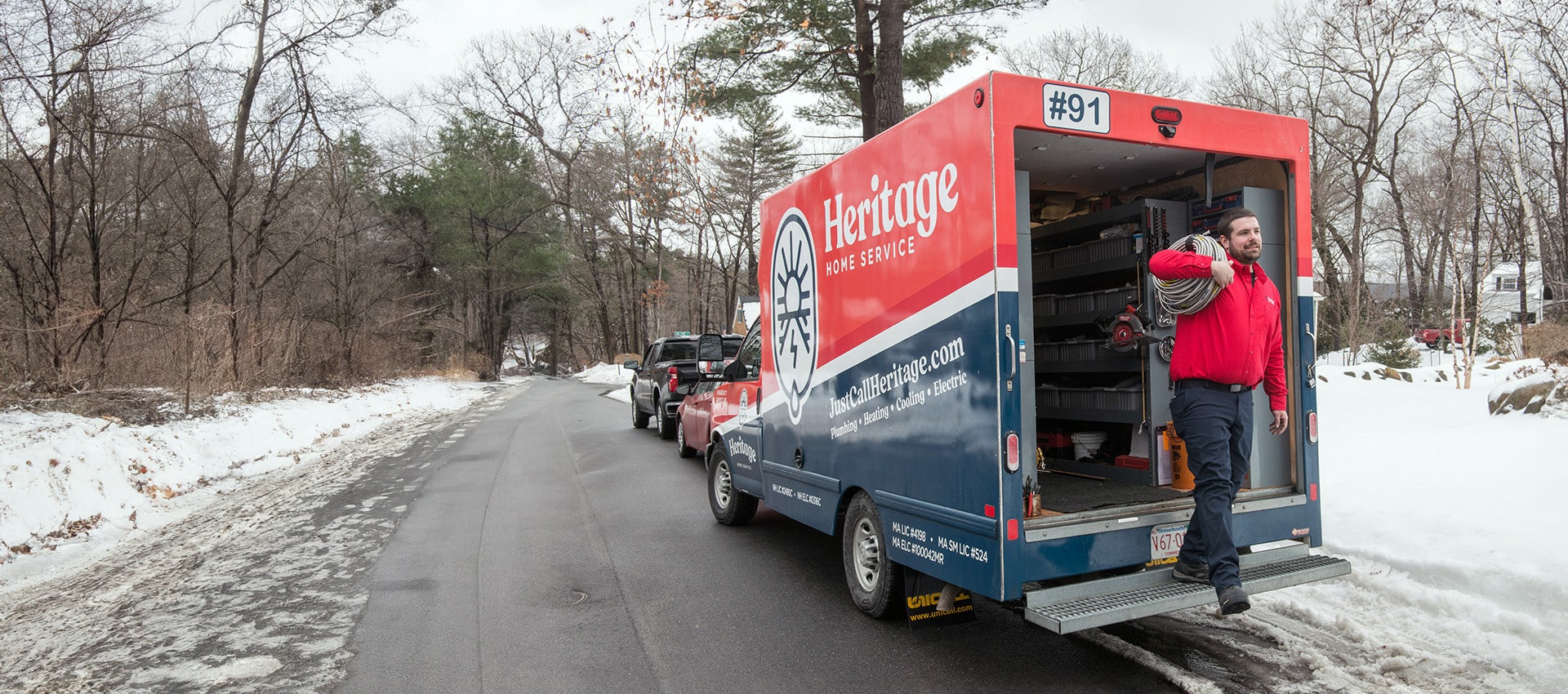
A damaged water line can cause low pressure, discolored water, damp areas, rising water bills, and serious property damage. Whether the problem involves an accessible pipe inside your home or the main line supplying water to the property, prompt diagnosis can help limit water loss and prevent further damage.
Heritage Home Service provides professional water line repair in Maine. Our family-owned team locates plumbing problems, explains the available options, and completes appropriate repairs with a focus on safety, reliability, and long-term performance.
Suspect a leaking or damaged water line? Call Heritage Home Service today for dependable water line repair in Maine.
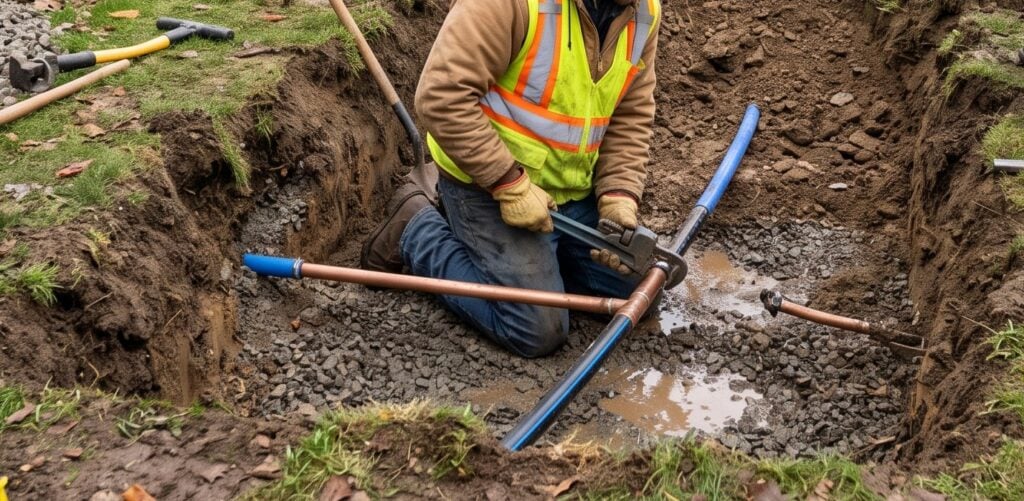
What Are the Signs of a Damaged Water Line?
Some water line failures cause an obvious leak. Others remain concealed behind walls, beneath floors, or underground, where they can waste water and damage the property without being immediately visible.
Warning signs include:
- An unexplained increase in water bills
- Low water pressure throughout the home
- A sudden drop in water pressure
- Rusty, cloudy, or discolored water
- Wet spots on walls, ceilings, or floors
- Damp areas in the basement or crawl space
- Water sounds when no fixtures are running
- A water meter that moves while water is not being used
- Musty odors or visible mold
- Unusually lush or soggy areas in the yard
- Puddles that appear during dry weather
- Cracks or changes in paved areas
- Air or sputtering at faucets
- A complete loss of water service
These symptoms can have several causes. Low pressure, for example, may come from a damaged main water line, a partially closed valve, mineral buildup, a faulty pressure regulator, a well-system problem, or a municipal supply issue.
A professional evaluation is necessary to identify the source before repairs begin.
What Is the Difference Between a Water Line and a Sewer Line?
A water line carries clean, pressurized water into the home and distributes it to faucets, toilets, water heaters, appliances, and other fixtures. A sewer line carries wastewater away from the property.
Water line problems may cause:
- Continuous clean-water leakage
- Low pressure
- Discolored water
- Wet building materials
- Unexplained water use
Sewer line problems are more likely to cause:
- Slow drains
- Sewage backups
- Gurgling fixtures
- Wastewater odors
- Several clogged drains
Correctly distinguishing between the two is important because the diagnostic methods, repair options, and health concerns are different.
Why Do Water Lines Leak or Break?
Residential water lines can fail because of age, weather, corrosion, installation issues, or sudden physical damage.
Common causes include:
- Freezing water inside pipes
- Corrosion
- Excessive water pressure
- Ground movement
- Repeated freeze-and-thaw cycles
- Loose or deteriorated connections
- Accidental damage during construction
- Shifting foundations
- Mineral buildup
- Tree root activity around underground piping
- Aging pipe materials
- Improper previous repairs
- Wear around valves and fittings
The cause should be addressed whenever possible. Repairing a leak without correcting excessive pressure, inadequate winter protection, or another underlying condition may allow the problem to return.
How Do Maine Winters Affect Water Lines?
Maine’s extended periods of freezing weather can be hard on plumbing. Water expands when it freezes, creating pressure inside a pipe. That pressure can split the pipe or damage fittings and connections.
Vulnerable water lines are often found in:
- Exterior walls
- Unheated basements
- Crawl spaces
- Garages
- Attics
- Cabinets along exterior walls
- Seasonal properties
- Poorly insulated areas
- Spaces exposed to cold drafts
- Underground areas with insufficient protection
A frozen pipe does not always leak immediately. The crack may remain blocked by ice until temperatures rise. Once thawing begins, water can escape rapidly.
Do not attempt to thaw a pipe with an open flame. This creates a serious fire risk and can damage the plumbing. If you cannot safely locate or thaw a frozen line using manufacturer- and safety-approved methods, call a professional.
What Should You Do If a Water Line Bursts?
A burst water line requires quick action. If it is safe to do so:
- Shut off the main water supply. Stopping the flow can significantly reduce damage.
- Turn off electricity to affected areas. Do this only if the electrical panel is safely accessible and you do not need to enter standing water.
- Open faucets. Releasing remaining water and pressure may help drain the system.
- Move belongings away from the leak. Protect furniture, electronics, documents, and other valuables when possible.
- Collect or redirect water. Use buckets or towels only when the area is electrically safe.
- Contact a plumber. Describe where the leak appears and whether the main water supply has been turned off.
- Begin appropriate water removal. Significant flooding may require professional water-damage mitigation.
Never enter standing water near outlets, appliances, an electrical panel, or exposed wiring. Contact emergency professionals if the area is unsafe.
How Is a Water Line Leak Located?
Finding a visible leak beneath a sink may be straightforward. Concealed and underground leaks often require a more systematic approach.
The diagnostic process may involve:
- Reviewing water usage and symptoms
- Inspecting visible pipes, valves, and connections
- Checking the water meter
- Testing water pressure
- Isolating sections of plumbing
- Using acoustic or electronic leak-detection equipment
- Evaluating walls, floors, or ceilings for moisture
- Inspecting the area around the main service line
- Considering well or municipal supply conditions
- Performing additional tests based on the property
No single method is appropriate for every leak. Pipe material, depth, location, access, water pressure, and surrounding construction all affect how the problem can be found.
Accurate location helps reduce unnecessary opening of walls, flooring, landscaping, or paved areas.
What Happens During Water Line Repair?
Once the problem has been located, the plumber evaluates the pipe’s material, condition, accessibility, and extent of damage.
A typical repair process may include:
- Stopping or isolating the water: The affected line is shut off to limit leakage.
- Accessing the damaged section: This may involve opening a limited area of wall, ceiling, flooring, soil, or another surface.
- Evaluating surrounding pipe: The plumber checks whether the damage is isolated or part of broader deterioration.
- Explaining repair options: The recommended approach is discussed before authorized work proceeds.
- Removing damaged material: The failed pipe, fitting, valve, or connection is removed as appropriate.
- Installing the repair: Compatible replacement materials and fittings are used.
- Restoring water service: The system is refilled carefully.
- Testing the line: The repaired section is checked for leaks, pressure, and proper operation.
- Reviewing preventive measures: The plumber may recommend insulation, pressure correction, or other steps based on the cause.
The scope can range from replacing a small accessible section to repairing or replacing a buried main water service line.
Should You Repair or Replace a Damaged Water Line?
A localized repair may be appropriate when the damage is confined to one area and the surrounding pipe remains in good condition.
More extensive replacement may be worth considering when:
- Leaks occur repeatedly
- Several pipe sections show corrosion
- The material has widespread deterioration
- Water pressure remains poor throughout the home
- The existing line is undersized
- Repairs would involve several separate access points
- Previous repairs have failed
- The line has substantial freeze or ground-movement damage
- The cost of repeated repairs is approaching replacement cost
The best decision depends on pipe material, age, condition, accessibility, previous failures, and the cost of restoring disturbed areas.
A professional should explain why a localized repair or broader replacement is recommended rather than basing the decision on the property’s age alone.
What Causes Low Water Pressure?
Low pressure can be frustrating, but it does not automatically mean that the main water line has failed.
Possible causes include:
- A hidden leak
- A partially closed main valve
- A faulty pressure regulator
- Corroded or mineral-restricted pipes
- A problem with an individual fixture
- A clogged aerator
- Simultaneous household water use
- A well pump or pressure-tank issue
- Municipal supply conditions
- An undersized service line
If only one faucet has poor flow, the issue may be limited to that fixture. If pressure drops throughout the house, the cause may affect the main supply or several sections of plumbing.
Sudden, unexplained pressure loss deserves prompt investigation, particularly when accompanied by damp areas or increased water use.
Why Is My Water Discolored?
Water discoloration may result from corrosion, disturbed sediment, water heater problems, private well conditions, or work on a municipal water system.
A useful first step is to compare hot and cold water:
- Discoloration affecting only hot water may involve the water heater.
- Discoloration affecting both hot and cold water may originate in supply piping, the water source, or the main water line.
- Discoloration at only one fixture may involve a localized pipe or faucet issue.
Avoid drinking or cooking with unexpectedly discolored water until the cause is understood. Contact the appropriate water provider or a plumbing professional based on the circumstances.
Can Underground Water Lines Be Repaired?
Yes. Underground water lines can often be repaired when the damaged area can be located and accessed. The appropriate method depends on:
- Pipe material
- Depth
- Leak location
- Soil conditions
- Landscaping
- Driveways or other surfaces
- Extent of deterioration
- Local requirements
- Location of other utilities
Before excavation, underground utilities must be located through the appropriate process. Property owners should not dig based only on a suspected leak location.
In some cases, replacing a longer section may be more practical than excavating repeatedly for several failing areas.
How Can You Prevent Frozen and Damaged Water Lines?
Not every failure can be prevented, but these steps can lower the risk:
- Insulate pipes in vulnerable areas
- Seal openings that allow cold air to reach plumbing
- Disconnect outdoor hoses before winter
- Protect appropriate outdoor faucets
- Maintain adequate indoor heat
- Keep garage doors closed when plumbing is present
- Open sink cabinets during extreme cold when appropriate
- Allow a small water flow through vulnerable fixtures when advised
- Winterize seasonal properties correctly
- Repair dripping fixtures and small leaks
- Have excessive water pressure corrected
- Learn where the main shutoff valve is located
- Test the main shutoff before an emergency occurs
- Address corrosion or recurring leaks promptly
If you plan to leave a Maine home vacant during winter, consider arranging appropriate winterization or reliable temperature and leak monitoring.
Why Choose Professional Water Line Repair?
Water lines operate under pressure, and a small installation error can create a slow leak behind finished surfaces. Professional repair helps ensure that compatible materials are used, connections are properly completed, and the system is tested before service concludes.
Heritage provides neighborly, customer-first plumbing care backed by long-standing Northern New England roots. Our team understands how freezing temperatures, older homes, private wells, and seasonal conditions can affect Maine plumbing systems.
Homeowners can also call on us for leak detection, plumbing replacements, drain cleaning, sewer services, water heater repair, HVAC, and electrical solutions.
Frequently Asked Questions About Water Line Repair in Maine
-
Is a leaking water line an emergency?
An active leak that threatens the home, causes rapid water loss, or affects electrical components requires urgent attention. Shut off the water if it is safe to do so and contact a plumber.
-
Who is responsible for an underground water service line?
Responsibility varies by location and where the damage occurs. Homeowners are commonly responsible for part or all of the private service line on their property, while the utility handles designated public infrastructure. Confirm the boundary with the local water provider.
-
Can a plumber repair a frozen pipe?
A plumber can evaluate a frozen line, thaw it using appropriate methods when conditions permit, and repair any resulting damage. The surrounding plumbing should also be checked for additional cracks or vulnerable areas.
-
Does a high water bill always mean there is a leak?
No. Increased household use, seasonal irrigation, running toilets, dripping fixtures, rate changes, and meter issues can also increase bills. A leak should be investigated when usage rises without a clear explanation.
-
Can a water line leak occur without visible water?
Yes. Concealed leaks may drain into wall cavities, soil, crawl spaces, or other hidden areas. Rising water use, low pressure, musty odors, or unexplained moisture can indicate a hidden problem.
-
How long does water line repair take?
The timeline depends on the leak’s location, accessibility, pipe material, and repair scope. An exposed interior repair may be completed more quickly than a buried line beneath landscaping or pavement.
-
Will water line repair fix low pressure?
It will help when a leak or damaged line is causing the pressure problem. If low pressure results from a regulator, fixture, well system, mineral buildup, or municipal supply condition, a different solution may be required.
Schedule Water Line Repair in Maine
A damaged water line can waste water and cause extensive damage if it is left unresolved. Prompt professional diagnosis can identify the source and determine whether a targeted repair or larger replacement is appropriate.
Contact Heritage Home Service today to schedule professional water line repair in Maine.

Financing Made Easy
When you choose Heritage, you can rest easy knowing that we provide straightforward options to help you budget for a complete solution that will last you for decades to come.
VIEW FINANCING OPTIONS
Complete Care Plan
With Complete Care, enjoy peace of mind knowing your home's plumbing, heating, cooling, and electrical needs are handled year after year—hassle-free, with added benefits.
VIEW PLAN