
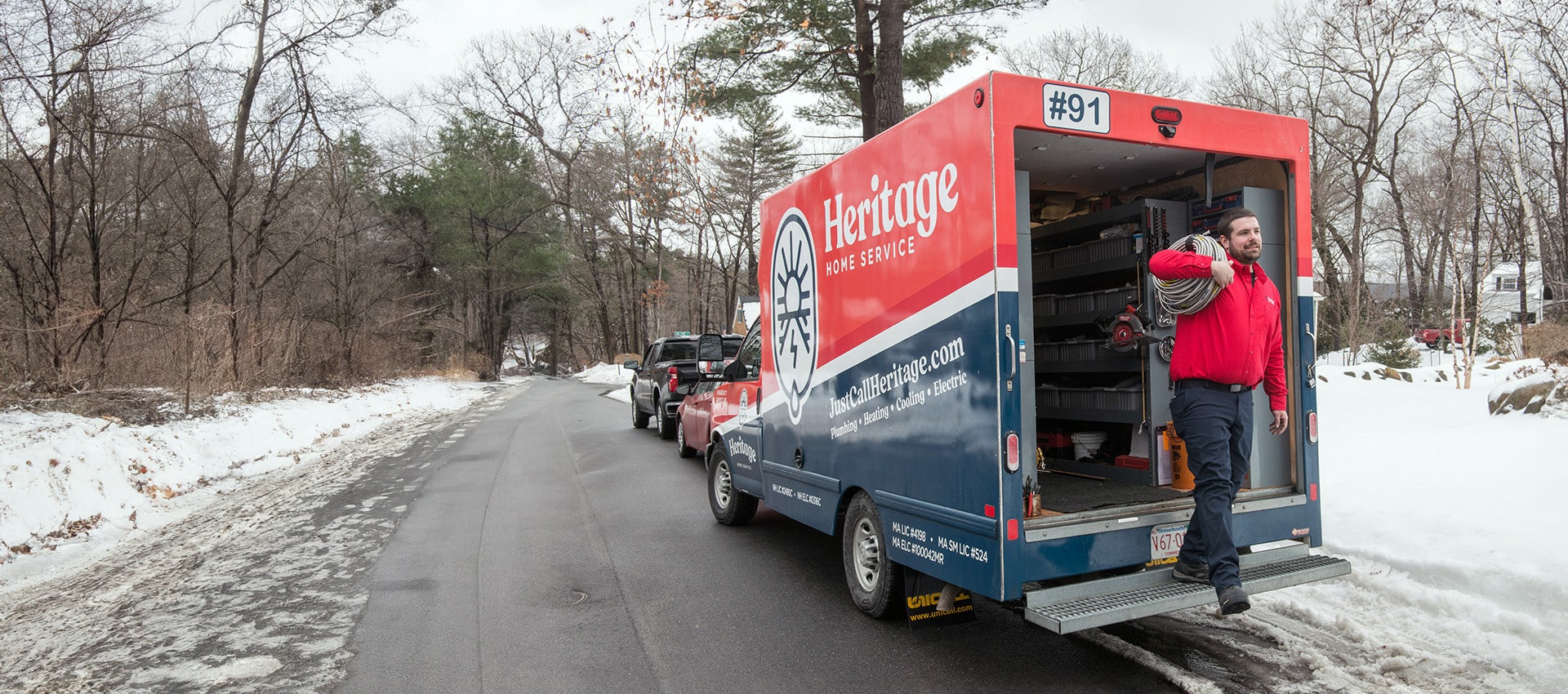
When your heating system stops working during a Maine winter, waiting days for help is not a realistic option. A loss of heat can quickly affect your family’s comfort and safety while placing plumbing fixtures and water lines at risk of freezing.
Heritage Home Service provides emergency heating services in Maine for furnaces, boilers, heat pumps, and other residential heating equipment. Our family-owned team responds with dependable service, careful diagnostics, and straightforward recommendations designed to restore your heat as quickly as possible.
Need urgent heating help? Call Heritage Home Service today for fast, reliable emergency heating service in Maine.

What Is Considered a Heating Emergency?
A heating problem becomes an emergency when it threatens household safety, leaves the home without adequate heat during freezing weather, or could cause further property damage.
Contact a heating professional promptly if:
- Your heating system will not turn on
- The system is running but producing no heat
- Indoor temperatures are falling rapidly
- You smell gas or another unusual odor
- A carbon monoxide alarm activates
- Your furnace repeatedly starts and shuts down
- The boiler is leaking water
- The system makes loud banging, grinding, or screeching noises
- Electrical components appear burned or damaged
- The circuit breaker repeatedly trips
- Your heat pump is covered in persistent heavy ice
- Vulnerable household members are exposed to unsafe temperatures
If you smell gas, suspect a carbon monoxide leak, see smoke, or believe there is an immediate fire hazard, leave the home and contact emergency services or the appropriate utility provider from a safe location. Do not reenter the property or attempt to restart the equipment until it has been declared safe.
What Should You Do When Your Heat Stops Working?
A few basic checks may identify a simple problem, but safety should always come first. Never open combustion components, bypass a safety switch, modify wiring, or attempt a fuel-related repair yourself.
Before requesting service, you can safely check the following:
- Review the thermostat settings. Confirm that the thermostat is set to “heat” and that the target temperature is above the current room temperature.
- Check the thermostat display. Replace the batteries if the display is blank and the model uses replaceable batteries.
- Inspect the circuit breaker. Look for a tripped breaker associated with the heating system. If it trips again after being reset once, leave it off and request professional service.
- Check the emergency switch. Some heating systems have a nearby wall switch that looks like an ordinary light switch. Make sure it was not accidentally turned off.
- Examine the air filter. A severely clogged filter can restrict airflow and cause certain furnaces to shut down.
- Look for an error code. A furnace, boiler, or ductless unit may display a diagnostic light or code. Write it down without opening the equipment.
- Check outdoor equipment. If you use a heat pump, make sure the outdoor unit is not buried in snow or blocked by loose debris.
If these simple checks do not restore heat, contact a professional. Repeatedly resetting the system may worsen the problem or interfere with its safety controls.
Why Is Losing Heat So Serious in Maine?
Maine’s winter temperatures can remain below freezing for long periods. Without a working heating system, indoor temperatures may decline quickly, particularly in older homes or properties with limited insulation.
A prolonged loss of heat can lead to:
- Unsafe conditions for children, older adults, and pets
- Frozen or burst water pipes
- Damage to plumbing fixtures
- Water damage inside walls, ceilings, or floors
- Moisture and mold problems after a pipe failure
- Increased risk from unsafe temporary heating methods
- Damage to temperature-sensitive belongings
Homes near Portland, the Maine Turnpike, and coastal communities can also experience winter storms that complicate travel and repair schedules. Calling for help as soon as a serious heating problem develops gives you the best opportunity to limit discomfort and property damage.
What Heating Systems Can Be Repaired?
Professional emergency heating service may be available for a wide range of residential equipment, including:
- Gas furnaces
- Oil furnaces
- Electric furnaces
- Boilers
- Heat pumps
- Ductless mini-splits
- Zoned heating systems
- Thermostats and heating controls
- Hydronic heating components
The specific repair will depend on the system’s type, age, condition, and parts availability. A technician will diagnose the cause of the failure before explaining the appropriate options.
What Causes Heating Systems to Stop Working?
Heating equipment can fail for many reasons. Some problems develop gradually, while others occur without an obvious warning.
Common causes include:
- Dirty or clogged air filters
- Failed ignitors or ignition components
- Faulty thermostats
- Worn blower motors
- Damaged belts or bearings
- Loose or failed electrical connections
- Malfunctioning control boards
- Blocked vents or exhaust systems
- Fuel delivery problems
- Circulator pump failure
- Boiler pressure problems
- Refrigerant-related heat pump issues
- Outdoor units blocked by ice or snow
- Defrost control failures
- Clogged condensate drains
- Tripped safety switches
- Lack of routine maintenance
An accurate diagnosis matters because different failures can produce similar symptoms. For example, a furnace that will not start could have a thermostat problem, ignition failure, electrical issue, or safety shutdown. Replacing parts without identifying the actual cause can waste time and money.
What Happens During an Emergency Heating Service Visit?
The technician’s first priority is to understand the immediate problem and check for safety concerns. You can help by describing when the issue began, any unusual noises or odors, and whether the system displayed an error code.
A typical emergency service process may include:
- Initial safety evaluation: The technician looks for electrical, combustion, fuel, venting, or carbon monoxide concerns.
- System inspection: Accessible heating components, controls, filters, wiring, and connections are examined.
- Diagnostic testing: The technician tests the system to identify why it failed or shut down.
- Explanation of findings: You receive an understandable description of the problem and the available options.
- Heating repair: When authorization, conditions, and parts availability allow, the technician completes the necessary repair.
- Operational testing: The system is run through a heating cycle to confirm that it operates correctly.
If an immediate repair cannot be completed, the technician can explain what is required and discuss practical next steps.
Should You Repair or Replace a Failed Heating System?
A heating breakdown does not automatically mean that you need new equipment. Many failures involve a single component that can be repaired.
Repair may be the practical choice when:
- The system has otherwise been reliable
- The problem is isolated
- Replacement parts are readily available
- The equipment still heats the home effectively
- The repair cost is reasonable compared with replacement
Replacement may deserve consideration when:
- The system has frequent breakdowns
- A major component has failed
- The equipment has serious safety concerns
- Parts are obsolete or difficult to obtain
- The system cannot heat the home adequately
- Energy use has increased substantially
- Repair costs are high relative to the system’s condition
- The equipment is near the end of its expected service life
The decision should account for reliability, comfort, safety, efficiency, repair history, and long-term cost. Heritage will explain the situation clearly so you can make an informed choice for your household.
How Can You Stay Safe While Waiting for Heating Service?
If your home is safe to occupy while you wait, take reasonable steps to conserve heat:
- Close curtains and blinds
- Keep exterior doors closed
- Gather family members in a central room
- Add layers of warm clothing
- Use blankets
- Close doors to unused rooms when appropriate
- Open sink cabinet doors near exterior walls
- Let vulnerable faucets drip if freezing pipes are a concern
- Monitor indoor temperatures
- Arrange a warmer location for vulnerable people and pets if necessary
Never use an outdoor grill, generator, camp stove, or unvented combustion appliance inside the home or garage. Do not use the oven to heat your home. These methods can cause fires or dangerous carbon monoxide accumulation.
Portable electric heaters should be placed on a stable surface away from bedding, curtains, furniture, children, and pets. Plug them directly into a suitable wall outlet and follow all manufacturer safety instructions.
How Can Homeowners Reduce Future Heating Emergencies?
Not every breakdown can be prevented, but proactive care can reduce avoidable failures.
Consider the following heating-season checklist:
- Schedule professional maintenance before winter
- Replace or clean filters regularly
- Keep supply and return vents clear
- Test thermostats before cold weather arrives
- Keep furnace and boiler areas free from stored items
- Maintain working smoke and carbon monoxide alarms
- Keep heat pump equipment clear of leaves and snow
- Address unusual sounds or odors promptly
- Do not ignore short cycling or uneven heating
- Arrange repairs before a small issue becomes more serious
- Learn the location of your main water shutoff
- Have a plan for winter power outages
An annual tune-up gives a technician an opportunity to identify worn components, airflow restrictions, control problems, and other developing concerns before the coldest days of the year.
Why Choose Professional Emergency Heating Service?
Heating equipment contains electrical components, moving parts, high temperatures, and sometimes combustible fuels. Diagnosing it safely requires the correct training and testing tools.
Heritage provides customer-first care backed by long-standing Northern New England roots. Our team understands the urgency of a heating failure during a Maine cold snap and works to deliver a reliable solution—not simply a temporary guess.
Homeowners can also turn to our team for furnace and boiler maintenance, heat pump service, ductless systems, plumbing repairs, water heaters, drain cleaning, and electrical needs.
Frequently Asked Questions About Emergency Heating in Maine
-
Why is my furnace running but not producing warm air?
Possible causes include incorrect thermostat settings, restricted airflow, an ignition problem, a control failure, or a system that has overheated and activated a safety switch. A technician can test the equipment and identify the cause.
-
Why does my heating system keep turning on and off?
Frequent short cycles may be related to a clogged filter, thermostat problem, airflow restriction, overheating, incorrect equipment sizing, or a failing component. Because repeated cycling places additional wear on the system, it should be evaluated promptly.
-
Is a leaking boiler an emergency?
A significant or active boiler leak requires prompt attention. Water can damage the equipment and surrounding property, while low pressure may interfere with heating. Turn the system off if it is safe to do so and contact a professional.
-
Is frost on my heat pump normal?
A light, temporary layer of frost can be normal during cold-weather operation. Persistent heavy ice that blocks the outdoor coil or does not clear during defrost operation can indicate a problem.
-
Can I keep resetting my furnace?
No. One basic reset may be appropriate if the manufacturer’s instructions allow it, but repeated resets can conceal a malfunction or interfere with safety controls. Request professional service if the system continues shutting down.
-
What information should I provide when requesting emergency service?
Describe the type of heating system, what it is doing, when the problem began, and any sounds, odors, leaks, or error codes you noticed. Mention any immediate safety concerns and whether the home currently has any heat.
-
Can regular maintenance prevent emergency heating repairs?
Maintenance cannot eliminate every possible failure, but it can reduce avoidable breakdowns and reveal worn components before they stop working. Annual service is one of the best ways to prepare heating equipment for a Maine winter.
Request Emergency Heating Service in Maine
A heating failure during freezing weather deserves fast, professional attention. Heritage Home Service is ready to diagnose problems with furnaces, boilers, heat pumps, and ductless systems while helping Maine homeowners protect their comfort and property.
Call Heritage Home Service today for dependable emergency heating service in Maine.
Financing Made Easy
When you choose Heritage, you can rest easy knowing that we provide straightforward options to help you budget for a complete solution that will last you for decades to come.
VIEW FINANCING OPTIONS
Complete Care Plan
With Complete Care, enjoy peace of mind knowing your home's plumbing, heating, cooling, and electrical needs are handled year after year—hassle-free, with added benefits.
VIEW PLAN