
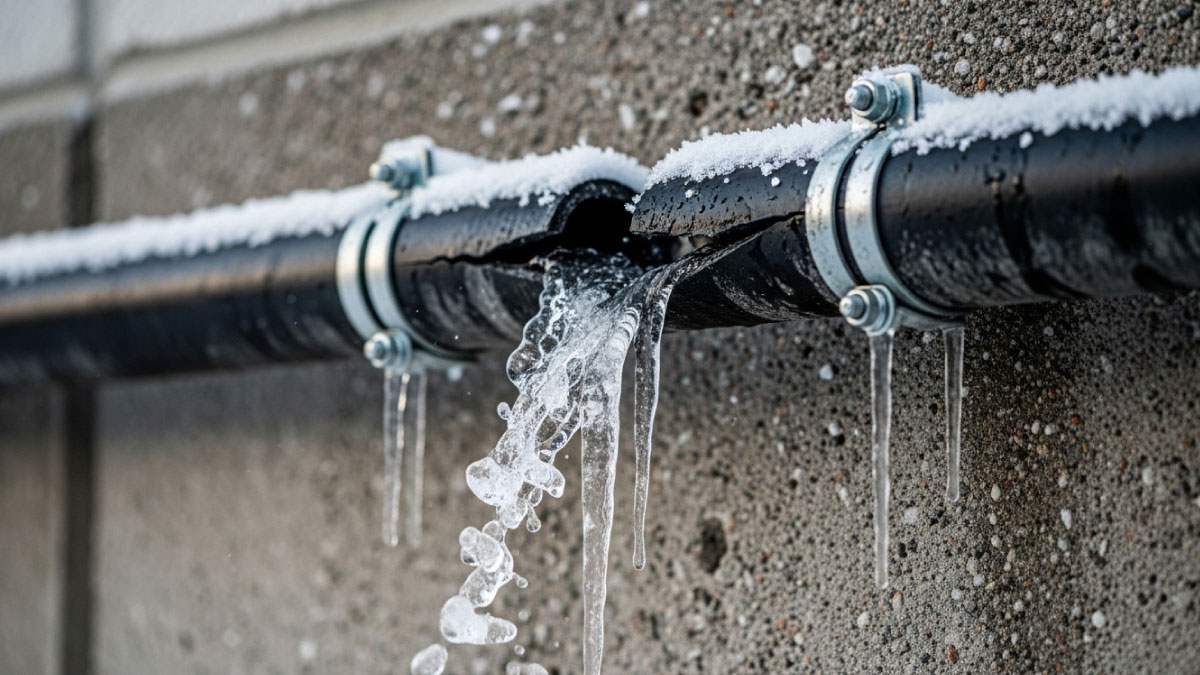
Every winter, Heritage Home Service gets calls from New Hampshire homeowners who have woken up to no water — or worse, water running where it should not be. Frozen and burst pipes are one of the most common and most damaging plumbing emergencies in New England, and when they happen, every minute counts.
This guide will walk you through what causes pipes to freeze, how to recognize the warning signs, what to do in the first moments of an emergency, and when to call a professional. If you are already dealing with a burst pipe right now, skip to the emergency steps below and call Heritage Home Service immediately.
Why Pipes Freeze in New Hampshire Homes
New Hampshire winters are among the harshest in the Northeast. Temperatures in the White Mountains, Lakes Region, and even southern communities like Salem and Nashua regularly drop well below zero for extended stretches. That kind of sustained cold puts enormous stress on residential plumbing — especially pipes that run through areas without adequate heat or insulation.
The physics are simple: water expands as it freezes. When that expansion happens inside a rigid pipe, the pressure can crack or rupture the pipe wall. The pipe may not leak while frozen, but once it thaws, the water comes rushing through the break.
Pipes most at risk in New Hampshire homes:
• Pipes running along exterior walls with little insulation
• Water supply lines in unheated crawl spaces or basements
• Pipes in attached garages, especially near exterior doors
• Outdoor hose bibs and irrigation lines left pressurized in fall
• Pipes in vacation or seasonal homes left without heat
How to Tell If You Have a Frozen Pipe
Catching a frozen pipe before it bursts can save you from thousands of dollars in water damage. The earlier you spot the warning signs, the better your chances of thawing the pipe safely without a rupture.
Common signs of a frozen pipe:
• Turning on a faucet and getting little to no water flow
• Visible frost or ice on exposed pipes in a basement, crawl space, or garage
• A strange odor coming from a drain or faucet — frozen pipes can trap gases
• Bulging or cracking visible on a section of pipe
• No water to a specific fixture even though other areas of the home work fine
If you suspect a frozen pipe, do not ignore it. The freeze-thaw cycle — especially if it happens repeatedly — dramatically increases the risk of a rupture.
What to Do When a Pipe Freezes: Step-by-Step
If you believe you have a frozen pipe, act quickly but carefully. Here is what to do:
1. Locate the frozen section. Check pipes along exterior walls, in unheated spaces, and near your water meter. The frozen area may feel unusually cold or show visible frost.
2. Keep the faucet open. Turn on the tap connected to the frozen pipe. As the ice begins to thaw, water and steam need an escape route. Keeping the faucet open relieves pressure and helps you track when flow resumes.
3. Apply gentle heat. Use a hair dryer, heating pad, or warm towels to slowly warm the frozen section. Start nearest the faucet and work toward the blockage. Never use an open flame, propane torch, or space heater left unattended near pipes.
4. Check all other fixtures. One frozen pipe often means others nearby are at risk. Check additional faucets throughout the home to identify any other affected lines.
5. Know when to stop and call. If you cannot locate the frozen pipe, if it is inside a wall or ceiling, or if you see any signs of cracking or water damage, stop and call a professional immediately.
What to Do When a Pipe Bursts
A burst pipe is a full emergency. Here is how to respond in the first critical minutes:
6. Shut off the main water supply immediately. Know where your main shutoff valve is before an emergency happens. In most New Hampshire homes it is located near the water meter, typically in the basement or utility room.
7. Turn off your water heater. With the water supply cut off, your water heater can overheat or run dry. Shut it off as a precaution.
8. Open all cold water faucets. This drains the remaining water from the pipes and reduces further flooding.
9. Document the damage. Take photos and video before cleaning up for your homeowner’s insurance claim.
10. Call Heritage Home Service. Our licensed plumbers respond quickly to burst pipe emergencies across New Hampshire. We will assess the damage, make the necessary repairs, and help you get your water back on safely.
How Much Damage Can a Burst Pipe Cause?
The numbers are sobering. A burst pipe can release 250 gallons of water or more per hour. Even a short burst before the water is shut off can soak walls, floors, insulation, and personal belongings. Water damage in the walls can lead to mold growth within 24 to 48 hours if not dried out properly.
Water damage repairs from a burst pipe can run anywhere from a few hundred dollars for a minor incident to tens of thousands of dollars if the water reaches finished living spaces, electrical systems, or flooring throughout multiple rooms. Fast response is the single most important factor in limiting the damage.
How to Prevent Frozen Pipes in New Hampshire
Prevention is always better than emergency repair. These steps can significantly reduce your risk of frozen pipes during a New Hampshire winter:
• Keep your thermostat set to at least 55 degrees Fahrenheit, even when you are away
• Open cabinet doors under sinks on exterior walls to let warm air reach the pipes
• Let cold water trickle from faucets on exterior walls during extreme cold snaps
• Insulate pipes in unheated crawl spaces, basements, and garages with foam pipe insulation
• Disconnect and drain outdoor hoses before the first freeze every fall
• Seal gaps and cracks in exterior walls or foundations where cold air can reach pipes
• If you leave for an extended period in winter, have someone check your home regularly or shut off the water and drain the system
DIY vs. Professional Pipe Repair: What You Need to Know
Some very minor pipe repairs — such as tightening a fitting or replacing a small section of accessible copper pipe — can be handled by a confident DIYer. But most burst pipe repairs in New Hampshire homes require professional service, especially when the damage involves inaccessible areas like walls, ceilings, or underground runs. Buried line breaks are a different job again, and our excavation and underground pipe services page explains how we reach and repair them.
Attempting to repair a burst pipe without proper tools or experience can result in improper fittings that fail again under pressure, missed damage in adjacent sections of pipe, water damage that goes undetected inside walls, and voided homeowner’s insurance claims if repairs are not done to code. A licensed plumber will repair the break correctly, check surrounding pipe sections for damage, and ensure your water system is fully restored before leaving.
Frequently Asked Questions About Frozen and Burst Pipes in NH
How fast can Heritage respond to a burst pipe in New Hampshire? We offer same-day emergency service across New Hampshire. Call us as soon as the emergency happens and we will dispatch a licensed plumber as quickly as possible.
Will my homeowner’s insurance cover a burst pipe? In most cases, yes — sudden and accidental pipe bursts are typically covered by standard homeowner’s policies. Gradual leaks or damage caused by neglect may not be. Document everything and contact your insurer promptly.
My pipe froze but did not burst. Do I still need a plumber? Not necessarily, but it is a good idea to have a professional inspect the affected section. A pipe that froze once is more likely to freeze again, and there may be hairline cracks that are not yet visible.
Do not wait until the next cold snap — call Heritage Home Service today. Our licensed New Hampshire plumbers are ready to respond to frozen and burst pipe emergencies fast, with same-day service available throughout the state.
For generations, families across New England have counted on Heritage Home Service for trustworthy, expert care. Call today to schedule your appointment and experience the difference of service built on integrity and tradition.

Financing Made Easy
When you choose Heritage, you can rest easy knowing that we provide straightforward options to help you budget for a complete solution that will last you for decades to come.
VIEW FINANCING OPTIONS
Complete Care Plan
With Complete Care, enjoy peace of mind knowing your home's plumbing, heating, cooling, and electrical needs are handled year after year—hassle-free, with added benefits.
VIEW PLAN