
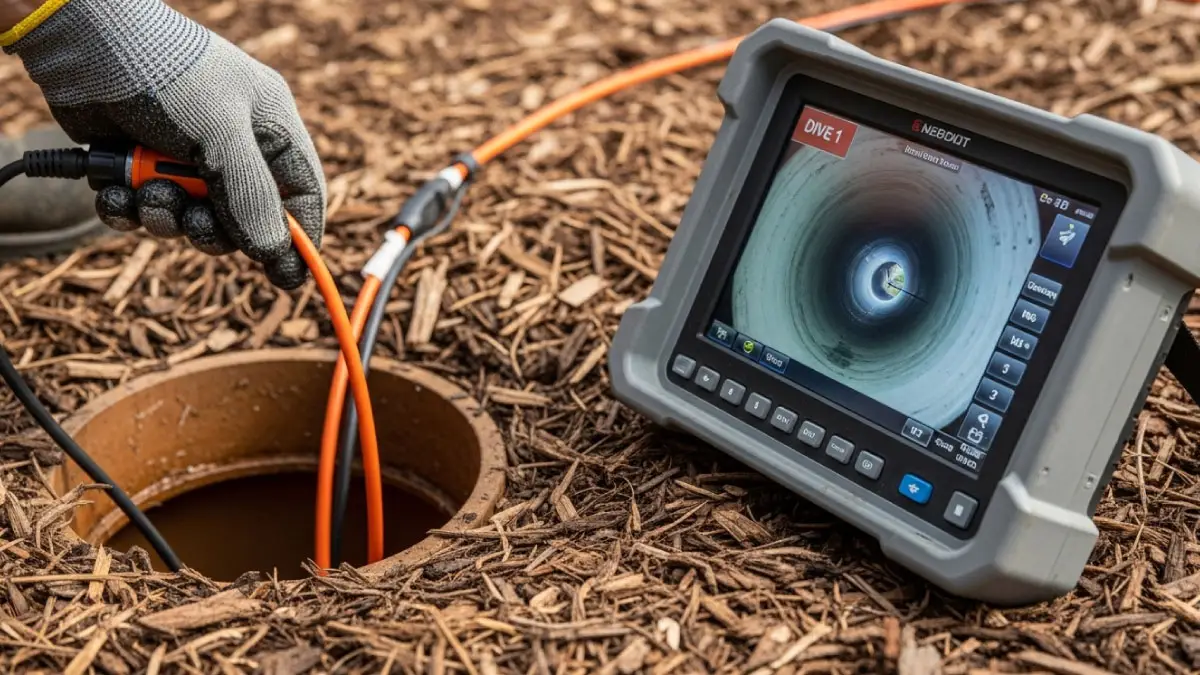
Heritage Home Service uses sewer camera inspection technology on nearly every sewer and drain diagnostic call we handle across New Hampshire. It is the single most valuable tool we have for understanding what is actually happening inside a pipe — and it removes all the guesswork from the diagnosis process.
Before camera inspection technology became widely available, plumbers diagnosed sewer line problems based on symptoms alone. They made educated guesses about what was happening underground and recommended repairs based on those guesses. Sometimes they were right. Sometimes they dug up a yard only to find the problem was somewhere else entirely. Today, a camera inspection tells us exactly what we are dealing with before a single shovel hits the ground.
This guide explains how sewer camera inspections work, what they can and cannot reveal, when you should schedule one, and what to expect when Heritage runs a camera through your New Hampshire home’s pipes.
How a Sewer Camera Inspection Works
A sewer camera is a waterproof, high-resolution video camera mounted on the end of a long, flexible cable. The cable is fed into your sewer line through an existing access point — typically a clean-out fitting, a toilet, or a floor drain — and pushed through the pipe while transmitting live video to a monitor that the technician watches in real time.
As the camera travels through the line, the technician can see every inch of the pipe’s interior — the pipe walls, any buildup or debris, joints and connections, and any areas of damage or concern. Many systems also include a locating transmitter in the camera head that allows the technician to pinpoint the camera’s exact location underground from the surface using a handheld receiver. This is how we know precisely where a problem is located and how deep it sits.
The inspection is non-invasive and typically takes between 30 minutes and an hour for a standard residential sewer line. There is no digging, no mess, and no disruption to your home’s plumbing beyond briefly running the camera through the pipe.
What a Sewer Camera Inspection Can Reveal
A sewer camera inspection provides a remarkably detailed picture of your pipe’s condition. Here is what our technicians are looking for and what the camera can identify:
Tree Root Intrusion
Roots are one of the most common sewer line problems in New Hampshire, particularly in established neighborhoods with large trees. Roots follow moisture and can infiltrate a sewer line through the smallest crack or a slightly open joint. Once inside, they grow and branch out, eventually creating a dense mass that catches toilet paper and debris and progressively blocks the pipe.
A camera inspection reveals root intrusion clearly — we can see the root mass, assess how much of the pipe diameter it is occupying, and determine whether cleaning alone can address it or whether repair is needed.
Cracks, Fractures, and Pipe Deterioration
Older pipes — particularly clay tile and cast iron lines common in New Hampshire homes built before the 1970s — develop cracks and fractures over time due to ground movement, freeze-thaw cycling, and simple age. The camera reveals the location, severity, and extent of any cracking, which is essential information for deciding between repair and replacement.
We can also see pipe deterioration — areas where the pipe wall has thinned, corroded, or begun to flake — that indicate the pipe is nearing the end of its serviceable life even if it has not yet failed.
Pipe Bellying and Negative Grade
A properly installed sewer line runs at a consistent downward slope so that gravity moves wastewater toward the municipal connection or septic system. Over time, ground movement and soil settlement can cause sections of the pipe to sag or dip, creating a low spot called a belly. Wastewater pools in the belly rather than flowing through, and solids accumulate there over time.
A camera inspection reveals bellied sections clearly — the technician can see standing water or debris accumulation in the low spot, and the locating transmitter identifies exactly where in the yard it is located.
Offset or Separated Pipe Joints
Ground movement, frost heave, and soil settlement can cause pipe sections to shift out of alignment at their joints. When joints separate or offset, the gap creates an entry point for root intrusion, allows soil to infiltrate the pipe, and can cause partial flow restrictions. The camera shows joint conditions throughout the line and flags any that are misaligned or separated.
Grease Buildup and Debris Accumulation
Years of kitchen grease, soap, and debris can coat the interior walls of drain and sewer lines, narrowing the flow channel significantly. The camera shows the extent of buildup throughout the line and helps us determine whether hydro jetting will resolve the restriction or whether there is an underlying structural issue as well.
Collapsed or Crushed Pipe Sections
In severe cases — often in very old clay lines or pipes that have been subjected to heavy surface loads like vehicles driving over the line — a section of pipe can partially or fully collapse. The camera will show us exactly where the collapse has occurred and how extensive it is, which directly informs the repair approach.
What a Sewer Camera Inspection Cannot Tell You
A sewer camera inspection is an extraordinarily useful diagnostic tool, but it does have limitations that homeowners should understand.
The camera shows the interior of the pipe but does not provide information about the condition of the soil surrounding the pipe, the depth of the line at every point, or the condition of lateral connections that branch off the main line beyond the camera’s reach. It also cannot inspect pipes that are completely blocked — if the line is fully obstructed, the camera cannot pass the blockage.
In cases where a full blockage prevents camera access, we will typically clear the line first and then run the camera to assess what caused the blockage and what the pipe’s overall condition looks like downstream.
When Should You Schedule a Sewer Camera Inspection?
There are several situations where a sewer camera inspection is clearly the right call. Heritage recommends scheduling one in any of the following circumstances:
• You are experiencing recurring drain backups or slow drains that keep returning after being cleared
• Multiple drains in your home are running slowly at the same time
• You are hearing gurgling sounds from toilets or drains
• You notice sewage odors inside or outside your home
• You see soggy patches, unusually lush grass, or sinkholes in your yard above the sewer line path
• You are buying or selling a home — a sewer inspection is a smart part of any home inspection
• Your home was built before 1980 and the sewer line has never been professionally inspected
• You are planning a landscaping or excavation project near your sewer line
Sewer Camera Inspection During a Home Purchase
One of the most valuable times to schedule a sewer camera inspection is before purchasing a home. Standard home inspections typically do not include a sewer line inspection, which means buyers can unknowingly inherit a failing sewer line that needs thousands of dollars in repair shortly after moving in.
A pre-purchase sewer inspection gives buyers clear information about the condition of the line before closing. If problems are found, buyers can negotiate repairs into the sale price, ask the seller to address the issue before closing, or simply make an informed decision about whether to proceed. It is a modest investment that can prevent a significant and unpleasant surprise.
What Happens After a Sewer Camera Inspection with Heritage
After we complete a camera inspection, we walk you through exactly what we found. We describe the condition of the pipe in plain language, show you the video footage if you want to see it, and explain the significance of anything we identified. If repairs are needed, we give you an honest, itemized estimate and explain your options — including whether trenchless repair, hydro jetting, or traditional replacement is most appropriate for your situation.
We do not use camera inspections as a sales tool to push unnecessary repairs. Our goal is to give you accurate information so you can make the best decision for your home and your budget. If your pipe looks good and no action is needed, that is exactly what we will tell you.
Frequently Asked Questions About Sewer Camera Inspections in NH
How long does a sewer camera inspection take? Most residential inspections take between 30 minutes and one hour depending on the length and accessibility of the line.
Do I need to do anything to prepare for a sewer camera inspection? In most cases, no preparation is needed. If you have a clean-out access point outside, make sure it is accessible. Our technician will let you know if anything specific is needed when you schedule the appointment.
Can a sewer camera inspection find the source of sewer odors in my home? Yes, in many cases. If the odor source is a crack, open joint, or damaged section in the sewer line, the camera inspection will identify it. Odors that originate from dried-out trap seals or ventilation issues may require additional diagnostic steps.
Schedule trusted home service with Heritage Home Service today. Our licensed New Hampshire plumbers are ready to inspect your sewer line, give you a clear and honest diagnosis, and recommend the right solution for your home.
For generations, families across New England have counted on Heritage Home Service for trustworthy, expert care. Call today to schedule your appointment and experience the difference of service built on integrity and tradition.

Financing Made Easy
When you choose Heritage, you can rest easy knowing that we provide straightforward options to help you budget for a complete solution that will last you for decades to come.
VIEW FINANCING OPTIONS
Complete Care Plan
With Complete Care, enjoy peace of mind knowing your home's plumbing, heating, cooling, and electrical needs are handled year after year—hassle-free, with added benefits.
VIEW PLAN