
Ductless Heating in Massachusetts
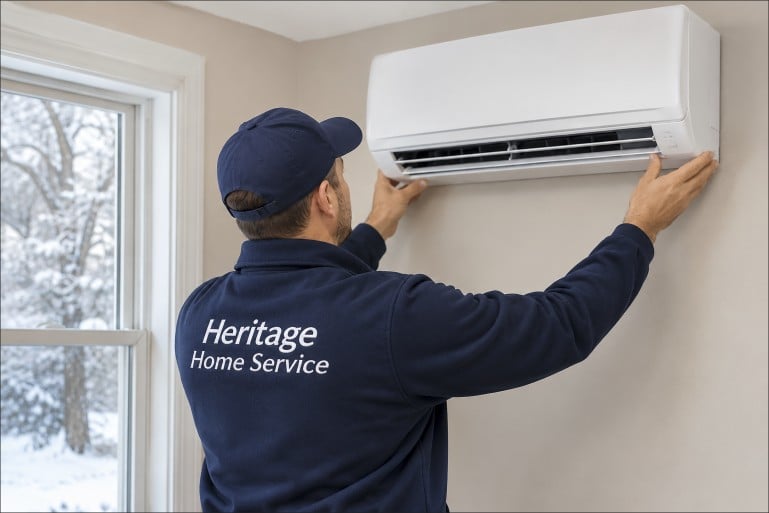
Keeping your Massachusetts home warm shouldn’t require installing bulky ductwork or heating rooms you rarely use. Heritage Home Service provides ductless heating installation, repair, and maintenance throughout Massachusetts, helping homeowners enjoy efficient, dependable comfort. Our family-owned company installs ductless mini-split heat pumps that deliver targeted warmth, even during cold New England winters. From older homes with radiators to finished basements and new additions, we help you find the right heating solution for your space.
Key Takeaways
- Ductless mini-split heat pumps provide heating and cooling without traditional ductwork.
- These systems work well in older Massachusetts homes, additions, finished basements, and cold rooms.
- Zoned temperature controls help reduce unnecessary energy consumption.
- Cold-climate heat pumps can continue heating during freezing winter weather.
- Eligible Massachusetts homeowners may qualify for Mass Save rebates.
- Professional sizing and installation help maximize comfort, efficiency, and equipment performance.
How Does Ductless Heating Work?
Ductless heating uses a heat pump to transfer warmth from outdoor air into your home. Unlike a traditional furnace, it doesn’t burn fuel to create heat.
A typical mini-split system includes an outdoor compressor unit and one or more indoor air handlers. Refrigerant lines connect these components through a small opening in an exterior wall.
During winter, the system extracts heat from outside air and transfers it indoors. In summer, the process reverses to provide air conditioning.
Because conditioned air enters rooms directly, ductless systems avoid the energy losses associated with traditional ductwork.
Which Massachusetts Homes Benefit Most From Ductless Heating?
Ductless mini-splits are especially useful for homes without central ductwork or areas that need additional temperature control.
Older Homes With Radiators or Baseboard Heating
Many older homes in Wilmington, Auburn, and surrounding Massachusetts communities rely on boilers, radiators, or electric baseboard heaters.
Adding traditional ductwork can require opening walls, ceilings, and floors. Ductless heating provides another option without major remodeling.
Homeowners can install mini-splits alongside existing equipment or consider a larger heating system conversion.
Home Additions and Finished Basements
New additions and converted basements often have different heating needs from the rest of the house.
A dedicated mini-split can warm these spaces without extending existing ductwork or overworking the primary heating system.
Cold Bedrooms and Hard-to-Heat Rooms
Upstairs bedrooms, home offices, and rooms above garages can experience uneven temperatures.
A properly sized ductless unit provides targeted heating where it’s needed.
Tired of uneven temperatures? Schedule a ductless heating consultation with Heritage Home Service today.
How Does Zoned Heating Help Reduce Energy Waste?
Zoned heating allows homeowners to control temperatures in different areas independently.
Instead of maintaining the same temperature throughout the house, you can adjust individual zones based on comfort and occupancy.
For example:
- Keep the living room comfortable during the evening.
- Lower the temperature in an unused guest bedroom.
- Warm a home office during working hours.
- Maintain comfortable temperatures in a finished basement.
- Adjust upstairs bedrooms separately from downstairs spaces.
This flexibility helps reduce unnecessary heating, especially in larger homes with different room usage patterns.
Actual energy savings depend on insulation, equipment efficiency, thermostat settings, and household habits.
Can Ductless Heat Pumps Handle Massachusetts Winters?
Yes. Modern cold-climate ductless heat pumps are designed to operate efficiently in freezing temperatures.
Unlike older heat pump models, many current systems maintain useful heating capacity during periods of extreme cold.
Some models operate at temperatures well below zero, although available heating capacity and efficiency vary by equipment.
For Massachusetts homeowners, proper system selection is essential.
Heritage evaluates your home’s insulation, heating requirements, and room layout before recommending equipment.
In some properties, ductless heating can serve as the primary heating system. Others may benefit from keeping an existing boiler or furnace for supplemental warmth.
What Happens During Ductless Heating Installation?
Professional installation begins with understanding your home’s heating needs and identifying suitable equipment.
Step 1: In-Home Heating Assessment
A technician evaluates your home’s square footage, insulation, room layout, and existing heating equipment.
This assessment helps determine whether a single-zone or multi-zone system is appropriate.
Step 2: Equipment Selection and Sizing
Heritage recommends equipment based on your home’s heating requirements and comfort goals.
Correct sizing matters because oversized or undersized equipment can reduce efficiency and temperature consistency.
Step 3: Indoor and Outdoor Unit Placement
Technicians identify suitable locations for indoor air handlers and the outdoor unit.
Placement considers airflow, accessibility, drainage, snow accumulation, and available exterior space.
Step 4: System Installation
The installation involves mounting equipment, connecting refrigerant lines, installing electrical connections, and providing condensate drainage.
Because traditional ductwork isn’t required, installation generally involves less disruption than adding a central forced-air system.
Step 5: Testing and Final Setup
After installation, technicians test heating performance, verify system operation, and explain temperature controls.
Homeowners receive guidance on filter cleaning, operating settings, and routine maintenance.
Are Mass Save Rebates Available for Ductless Heating?
Massachusetts homeowners may qualify for Mass Save incentives when installing eligible high-efficiency heat pumps.
Available rebates depend on several factors, including:
- Equipment efficiency and eligibility
- Whether the installation serves the whole home or selected areas
- Existing heating equipment
- Utility participation
- Required home energy assessments or weatherization improvements
- Installer and application requirements
Some programs distinguish between replacing an existing heating system and supplementing it.
Eligibility and incentive amounts can change. Visit Mass Save for current requirements before purchasing equipment.
Heritage can discuss available equipment options and help homeowners identify questions to ask about potential incentives.
Why Choose Heritage Home Service for Ductless Heating?
Heritage brings decades of New England home service experience to residential heating projects.
Our family-owned company focuses on practical recommendations, professional installation, and dependable customer care.
Massachusetts homeowners can count on:
- Experienced heating and cooling technicians
- In-home comfort assessments
- Properly sized ductless heating systems
- Single-zone and multi-zone installation options
- Upfront estimates and clear explanations
- Ongoing maintenance and repair services
We serve communities throughout our Massachusetts service area, including Wilmington, Auburn, and nearby towns.
Whether you’re upgrading an older home or improving comfort in one room, Heritage helps you choose equipment suited to your needs.
Frequently Asked Questions About Ductless Heating in Massachusetts
-
How much does ductless heating cost to run?
Operating costs depend on electricity rates, outdoor temperatures, insulation, equipment efficiency, and heating habits. Ductless systems can reduce heating expenses compared with electric resistance heating, but savings aren’t guaranteed.
-
Are ductless mini-splits noisy?
Modern ductless systems generally operate quietly. Indoor units use variable-speed fans, while outdoor equipment produces some operating noise. Proper installation helps minimize unwanted vibration.
-
Can ductless heating replace an oil or gas system?
Yes, properly designed cold-climate heat pumps can replace oil or gas heating in suitable homes. However, some properties benefit from retaining supplemental heat. A professional heating assessment helps determine the best approach.
-
Do ductless systems provide air conditioning?
Yes. Most ductless mini-split heat pumps provide both heating and cooling, allowing homeowners to use one system throughout the year.
-
How often does ductless heating need maintenance?
Homeowners should clean or inspect filters regularly and schedule professional maintenance according to manufacturer recommendations. Routine service helps maintain airflow, efficiency, and equipment performance.
Schedule Ductless Heating Installation in Massachusetts
If your home has cold rooms, outdated heating equipment, or no existing ductwork, a ductless mini-split may provide the comfort you’re looking for.
Heritage Home Service offers professional ductless heating assessments, installation, repair, and maintenance throughout Massachusetts.
Call Heritage Home Service today to schedule an in-home consultation, request an estimate, and find the right ductless heating solution for your Massachusetts home.


Financing Made Easy
When you choose Heritage, you can rest easy knowing that we provide straightforward options to help you budget for a complete solution that will last you for decades to come.
VIEW FINANCING OPTIONS

Home Advantage Membership
With Home Advantage Membership, enjoy peace of mind knowing your home’s plumbing, heating, cooling, and electrical needs are handled year after year—hassle-free, with added benefits.
VIEW MEMBERSHIP
What Our Customers Are Saying
Warren was extremely knowledgeable and familiar with my home and what’s going on with it. There was no pressure, and he even gave us a few tips to help save a bit of money! As a new homeowner, this was wonderful! Will definitely be booking service in the near future!
Show More
Marae Perruzzi
I ask Heritage Home Service for a Licensed plumber to come to my home to fill out Water Flow Form for Water Efficiency. Gladly the plumber came and checked everything and filled out the form without charging me. It’s a great company to start with. They are understanding what the customer is looking for. Thank you Heritage.
Show More
gmej
Michael arrived promptly on appointment time. Was very respectful and communicative on my first annual service on my new boiler system. A+++
Show More
BeachBoi08
The heritage team, Cory, and Edgar, We’re very professional, courteous and conscious not to interrupt anything in a person‘s home. I was very impressed with their knowledge and their assessment of what was going on. Excellent.
Show More
Jewel Church
Jim was very courteous and helpful. Unfortunately he was unable to fix the problem that I was having but he did the best he could and it was not his fault that he couldn’t fix the problem. I was not charged for the service which I am very much appreciated
Show More
Mary Fuller
We had a plumbing leak in our half bath in the basement. I looked online for a plumber near me and heritage home service was the first to come up. It said it was family owned and had been in business for 30 years so I felt that was a good advertising point. I called them. They told me that someone would be by that afternoon And they gave me a 4-Hour window. A young man named Ben called and said he was running ahead of schedule and would we mind if he stopped by early. Early? A rarity. So he stopped by. Took a look at our situation. Gave us a quote and got to work. He was done within 40 minutes, he kept the area clean and the commotion minimal. He was very personable and very professional. I highly recommend.
Show More
Marcia Fanning
Jim was great. Immediately pinpointed the issue, and just like that… fixed. Very grateful he fixed, definitely will use their service again
Show More
Viviann C
Fast clean and professional couldn’t ask for anything more very polite took the time to answer all my questions and point things out to me so much so that I signed up for the yearly service
Show More
Bob Mele
Todd did excellent work and was both friendly and informative. Once again, excellent work and service from Heritage. Thank you!
Show More
Carol D.
Eric was a pleasure to have as a service tech work our furnace today in Alton. He was promt, proficient and professional in every aspect. He gave a detailed explanation for everything he did in cleaning and evaluating our furnace on School St..
Show More
Ronald Breth
Schedule a comprehensive service near you!
Whether you need routine maintenance, repair, or new installation – we have you covered.